Pierre Caille
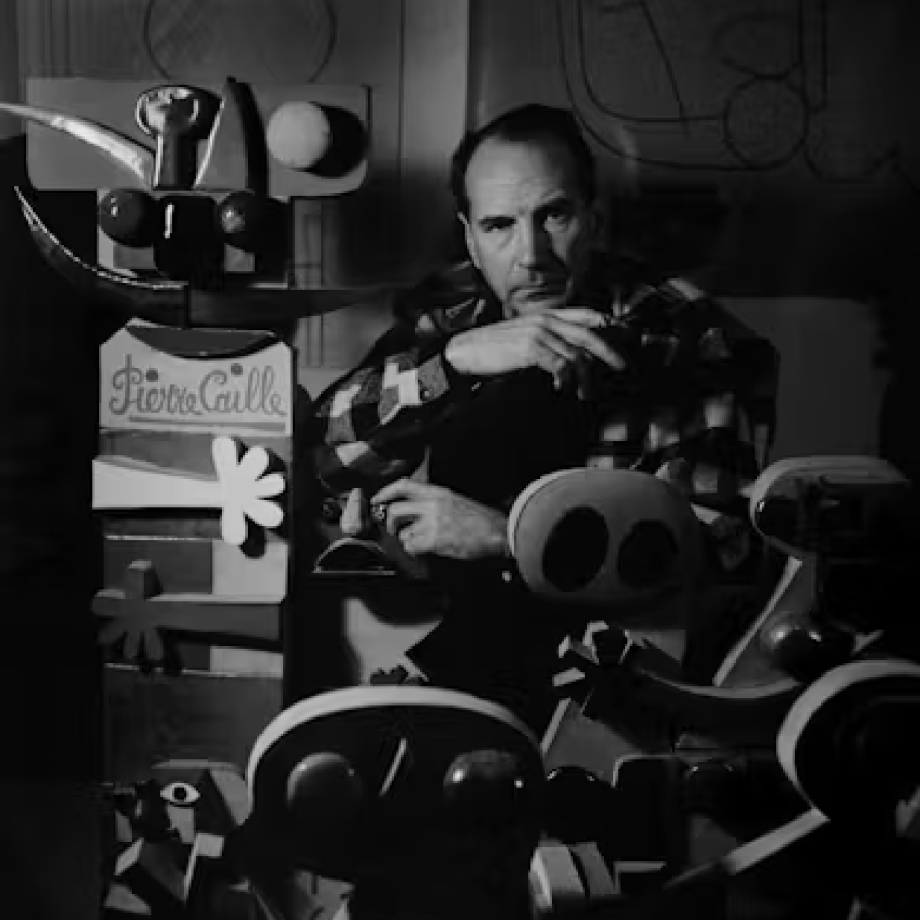
Pierre Caille
This versatile Belgian artist has a rich and varied oeuvre as a ceramist, but he was also active as a painter, sculptor, and draftsman. His polychrome wooden sculptures have gained international renown. He played a pioneering role in the development of ceramic sculpture in Belgium. He was also very creative as a teacher. His world is enriched with strange figures and insects, frightening or comical, fascinating in form and content. Dream structures, dream sculptures, full of imagination with great charisma and expression.
He lived and worked with Charles Leplae, Georges Grard, and Paul Delvaux, among others, and had exhibitions at an international level in Paris, Rotterdam, New York, Belgian Congo, South Africa, Washington, Munich, Belgrade, etc.
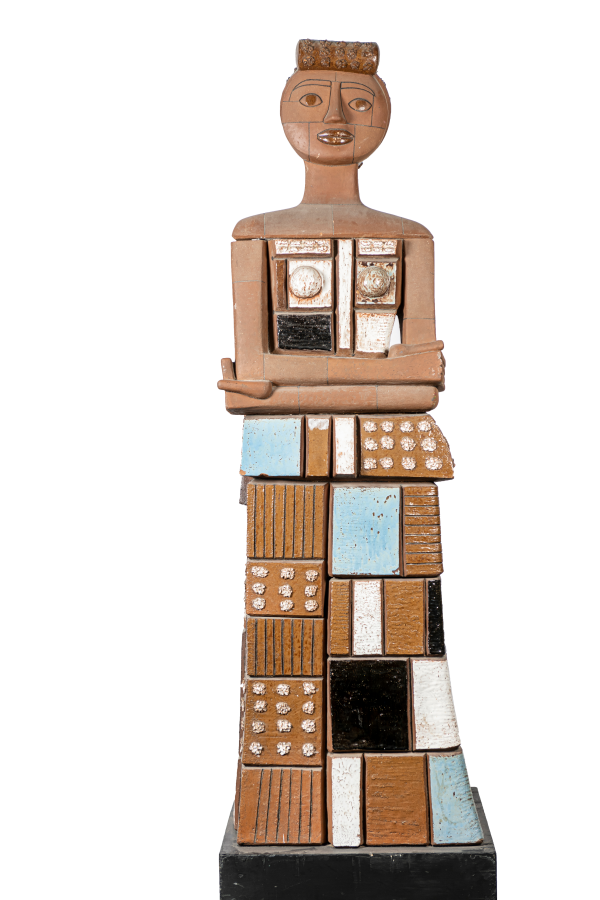
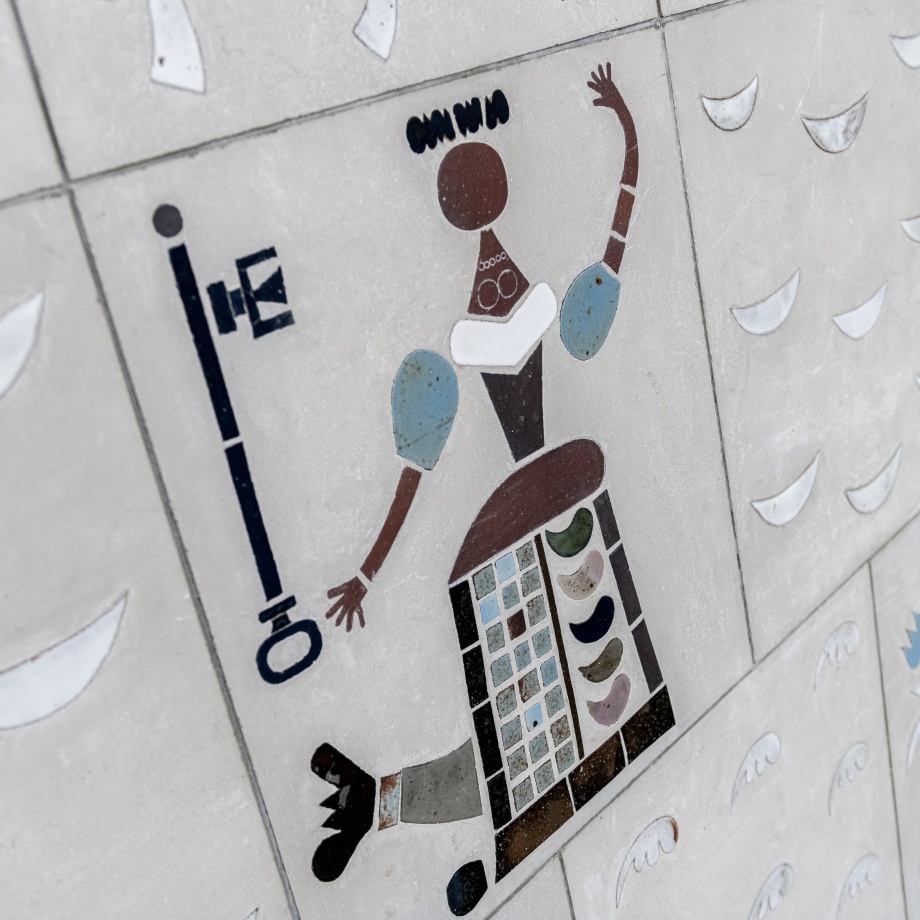
In 1953, he designed two large ceramic figures on pedestals for the grand hall of the Kursaal, depicting exotic female figures with crossed arms. Their clothing consists of square ceramic panels with various decorative motifs in different shades of brown and white. The heads are stylized and brown in color. These sculptures are characterized by their remarkable schematization and playful color scheme.
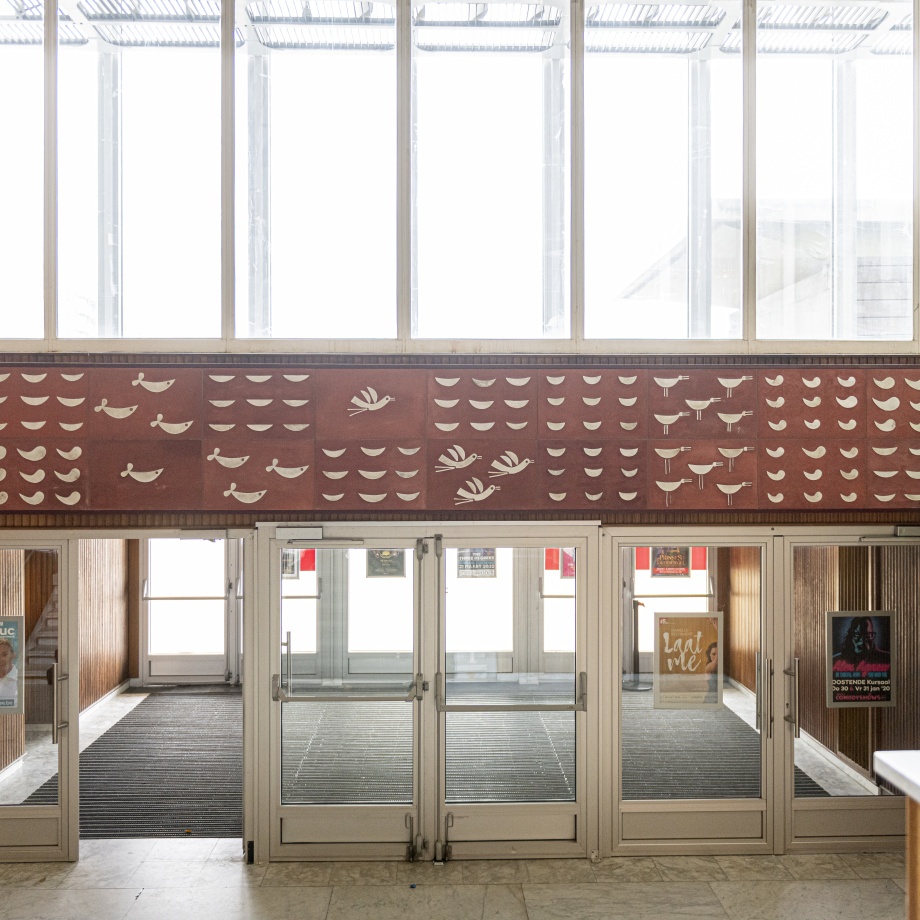
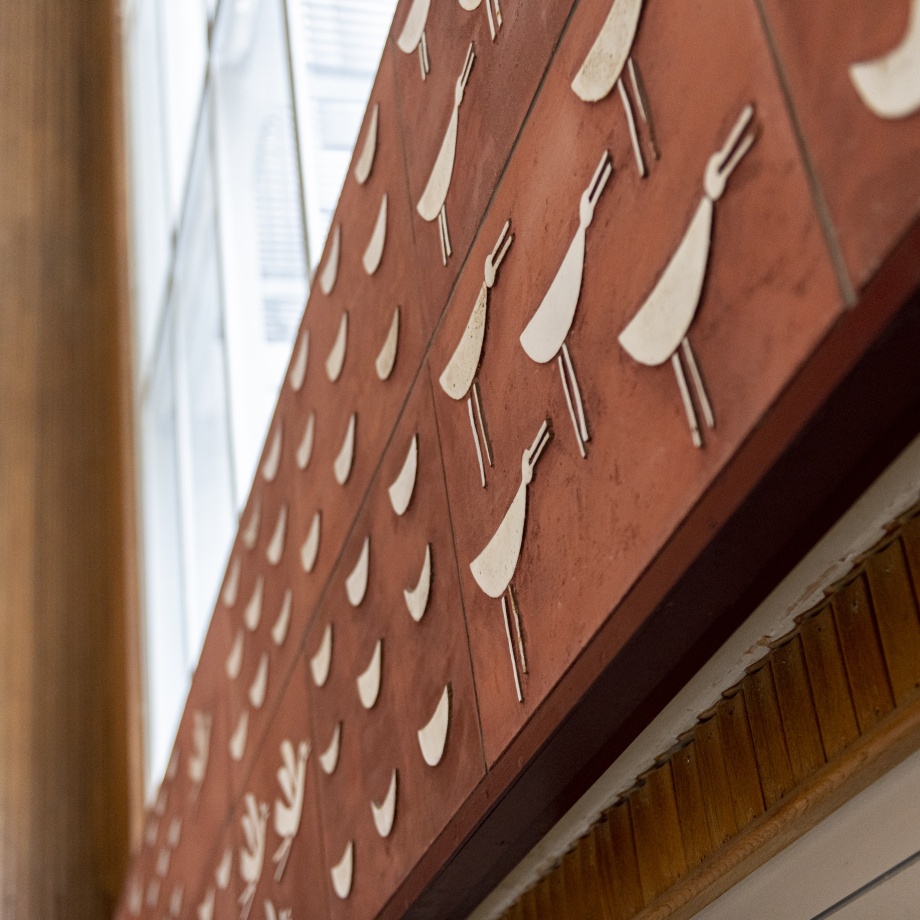
He also designed a number of decorative panels for the Kursaal, in which he was able to apply his own inlay technique (a process for applying a kind of inlay mosaic to architecture using stoneware tiles) on a large scale for the first time. A fine example of this can be found above the western entrance to the hall of honor. It is a ceramic frieze with a sienna-colored background on which pale, repetitive motifs such as clouds, waves, fish, etc. were arranged. It was as if they had been pressed into it with a giant roller stamp.
At the top of the stairs to the hall of honor, we find a ceramic windscreen. All kinds of marine motifs were applied to a pale background, blending the artist's mythology and imagination.

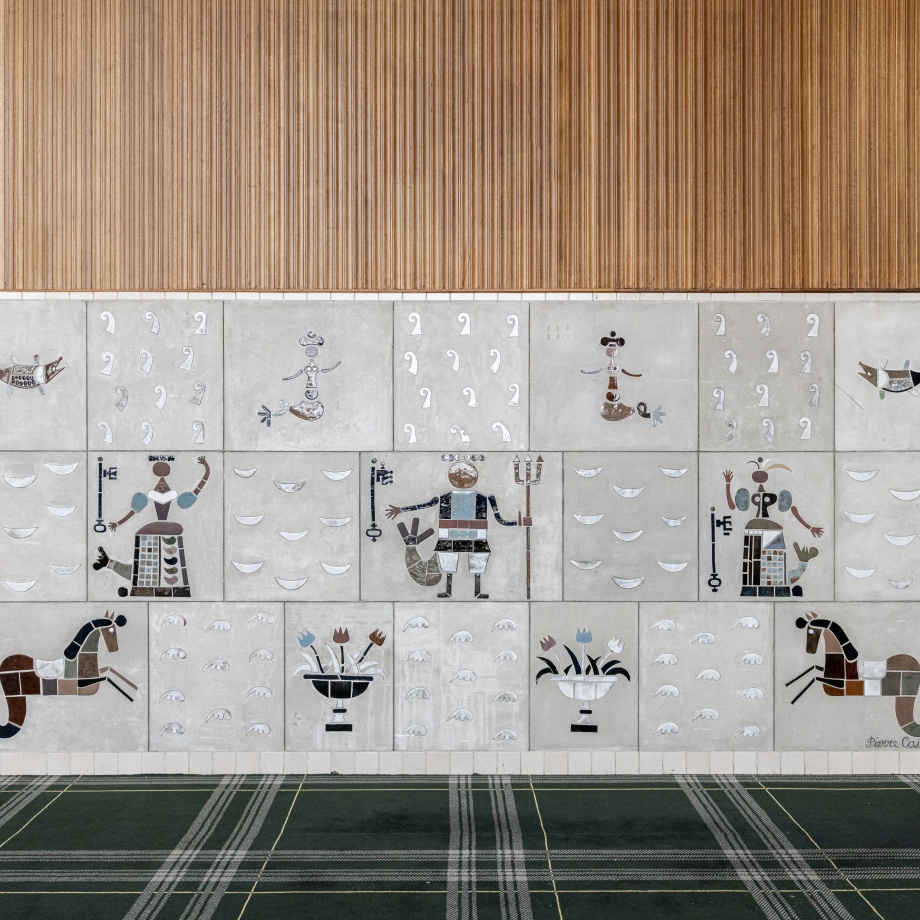
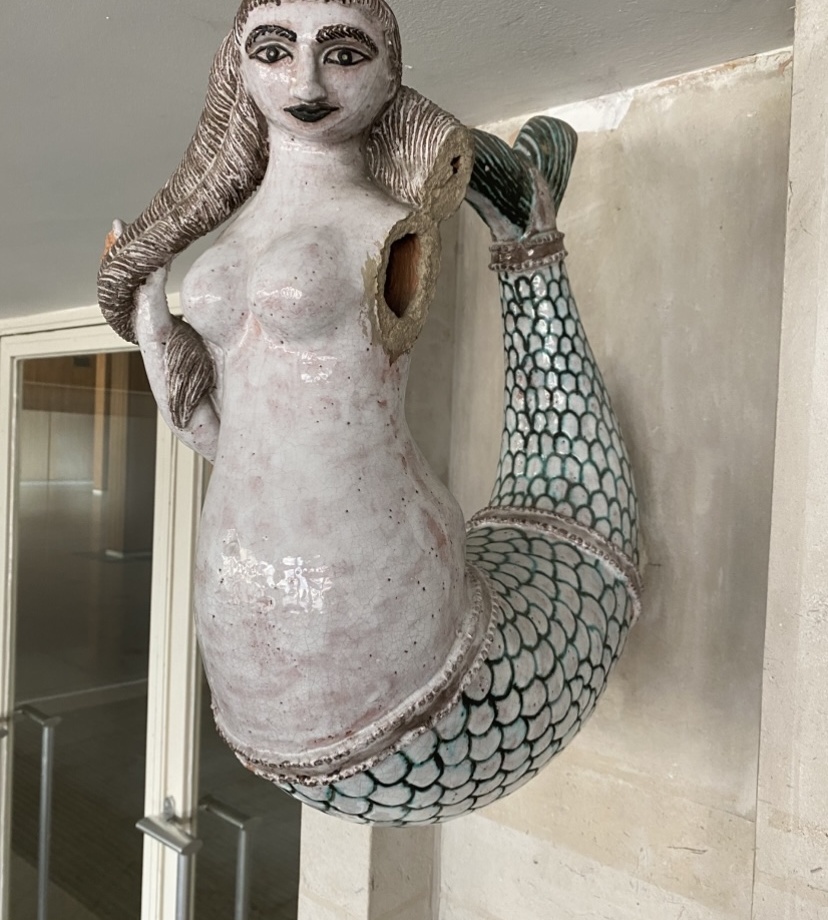
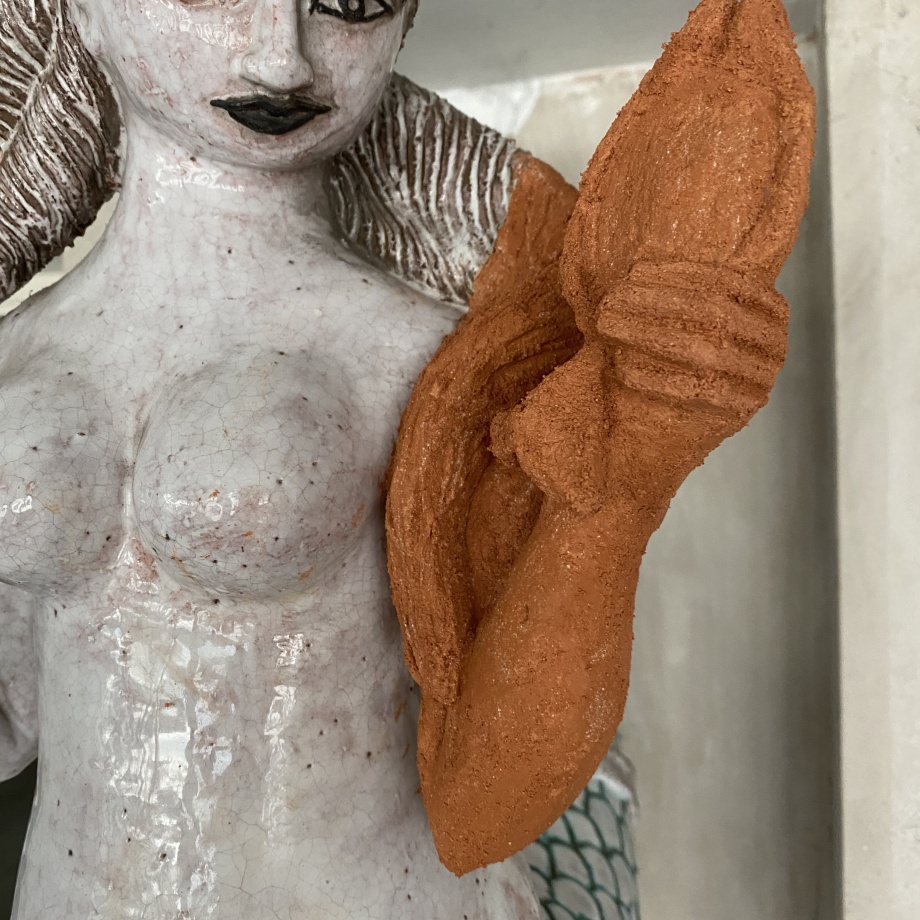
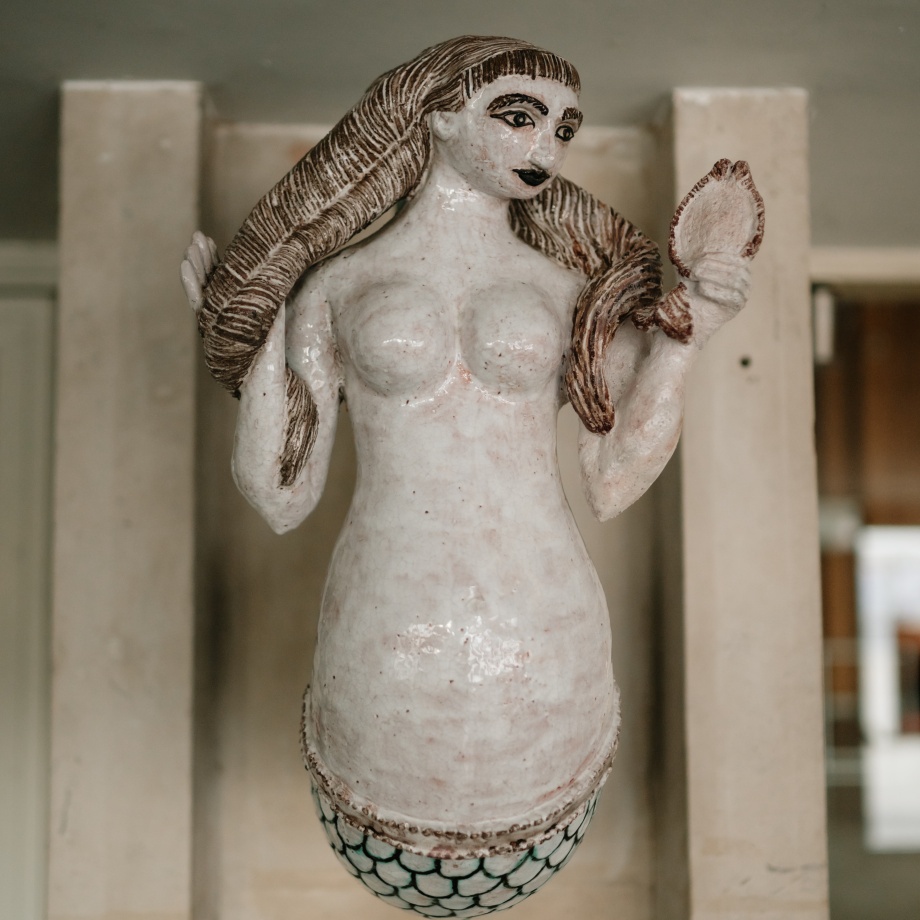
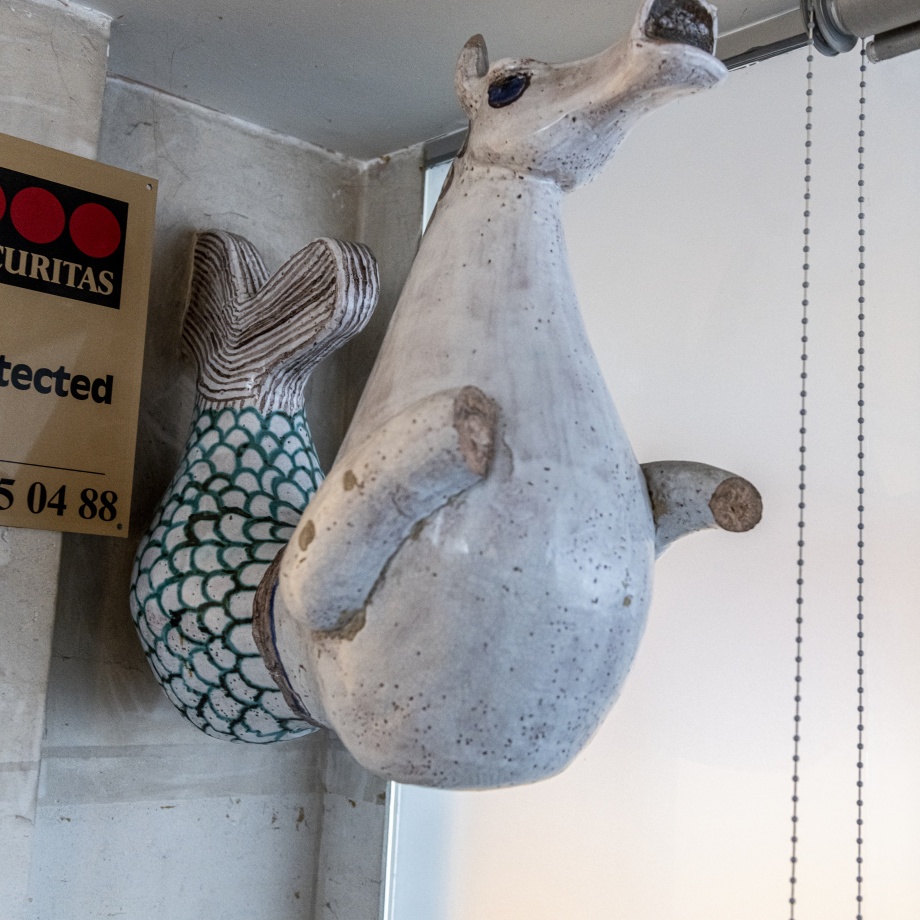
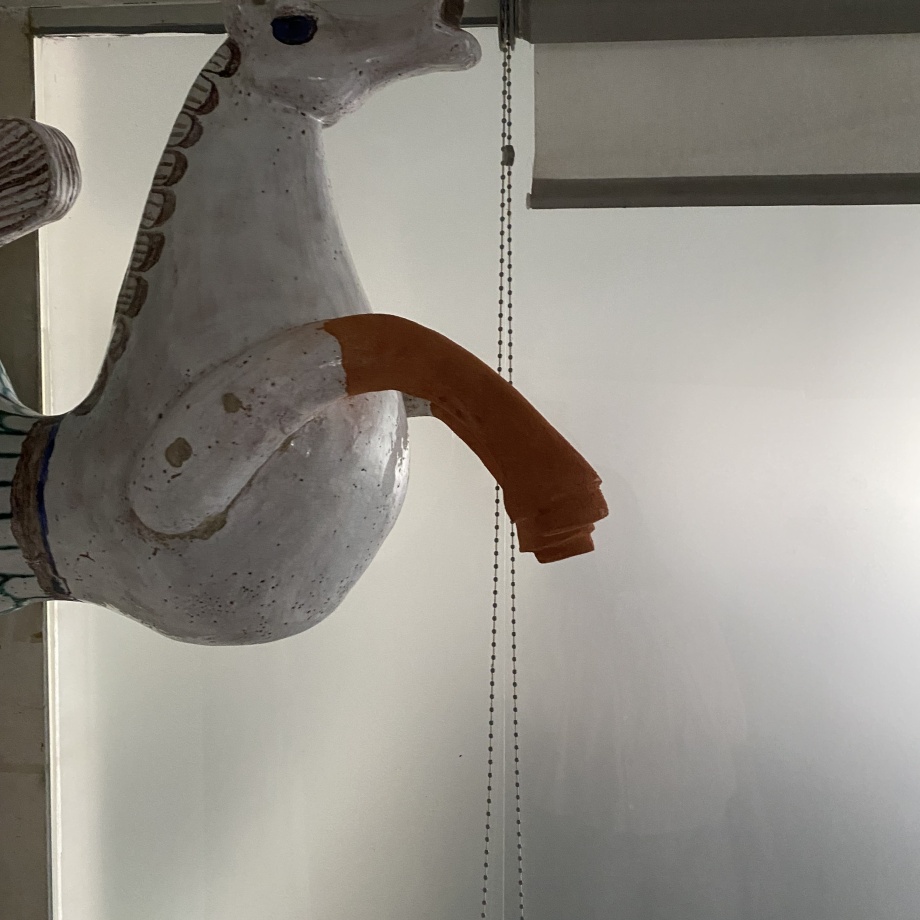
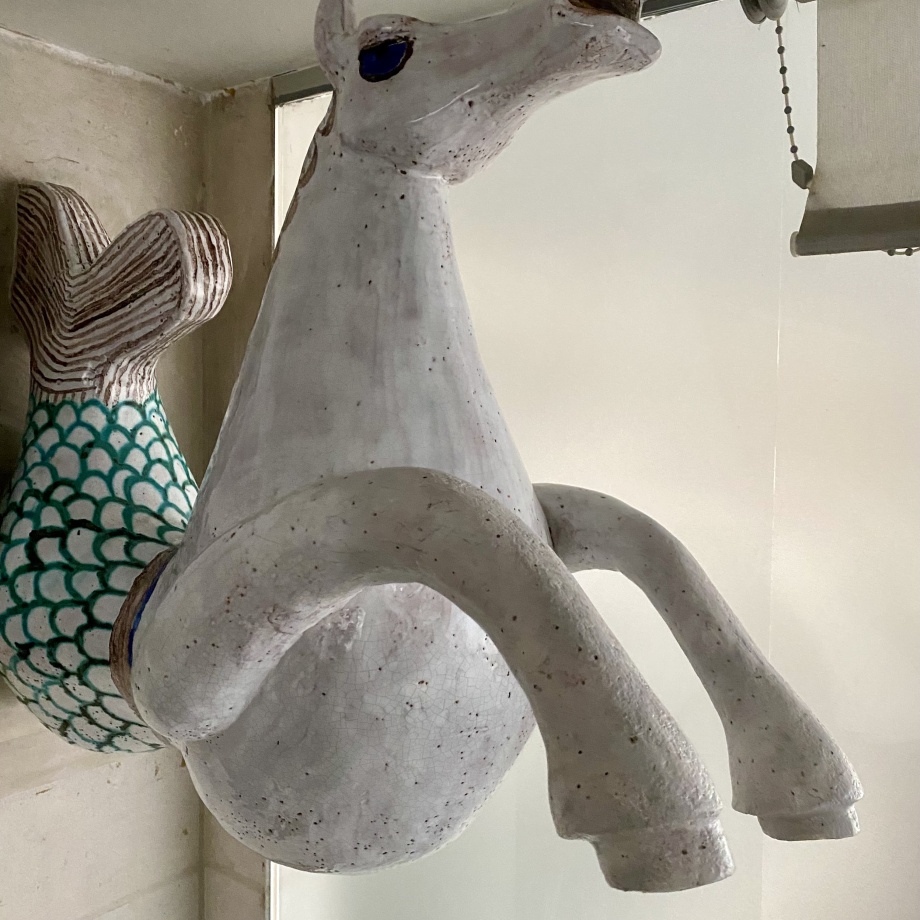
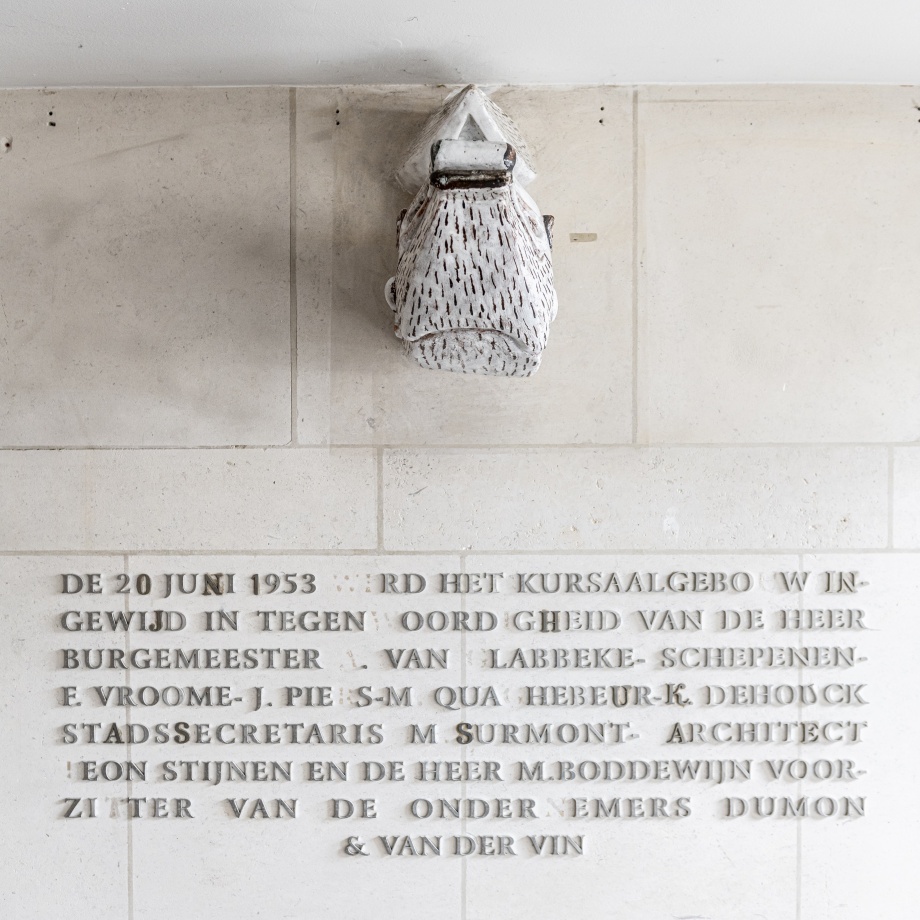
Six ceramic sculptures, created by students of Pierre Caille (1911-1996), can be admired in the entrance hall. Although they are all executed in the same color tone and ceramic technique, each work bears witness to the unique hand of individual artists.
As in many other places in the Kursaal, these sculptures also refer to the maritime theme of the sea.
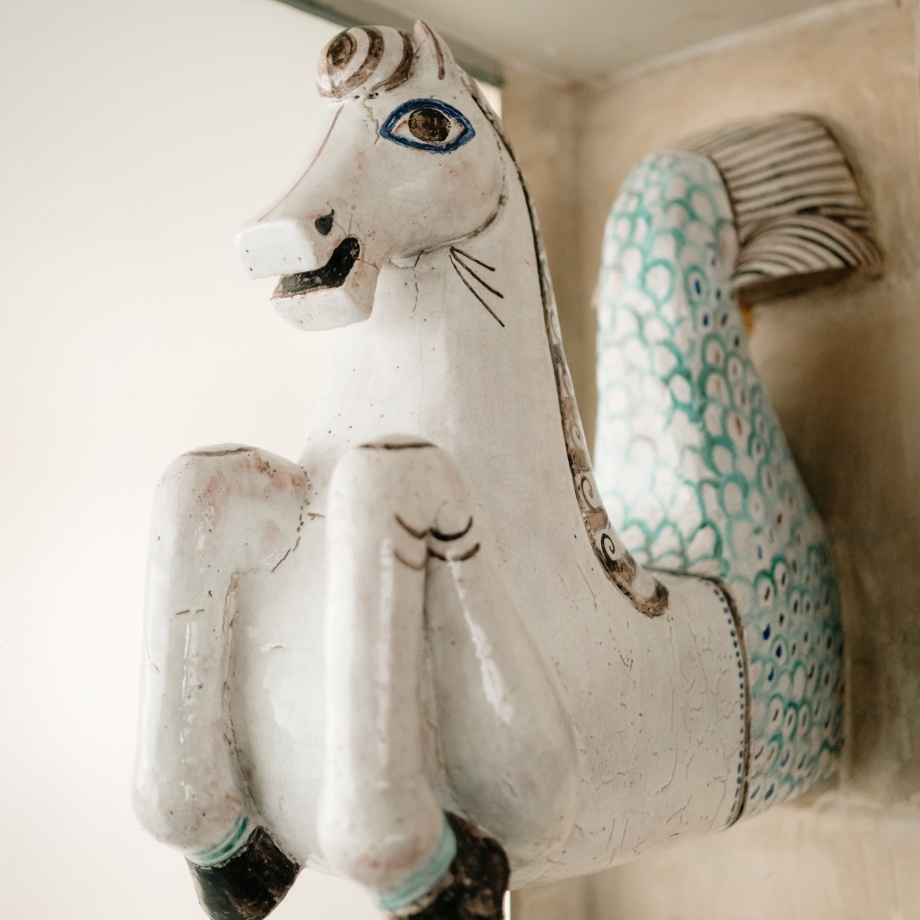
Some of the sculptures recently underwent careful restoration. In addition to subtle retouching—such as fixing discoloration, small additions, and repainting—the horse got its legs back, and the Siren can once again play her harp and seduce men, as originally intended.
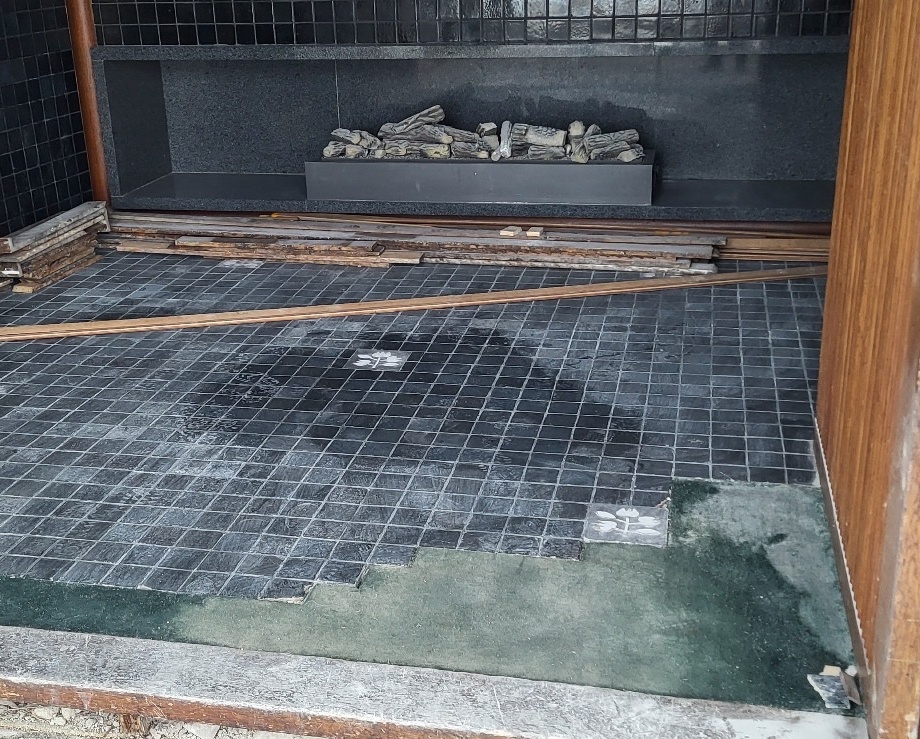
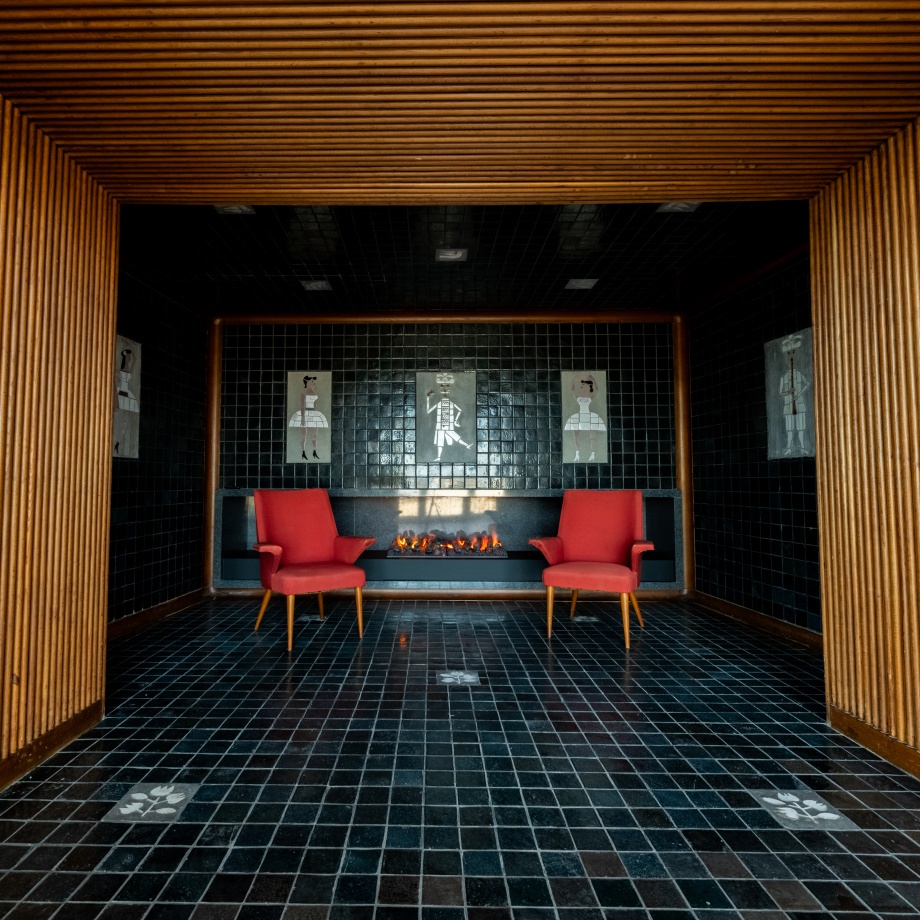
After twenty years, the fire corner is once again accessible to the public.
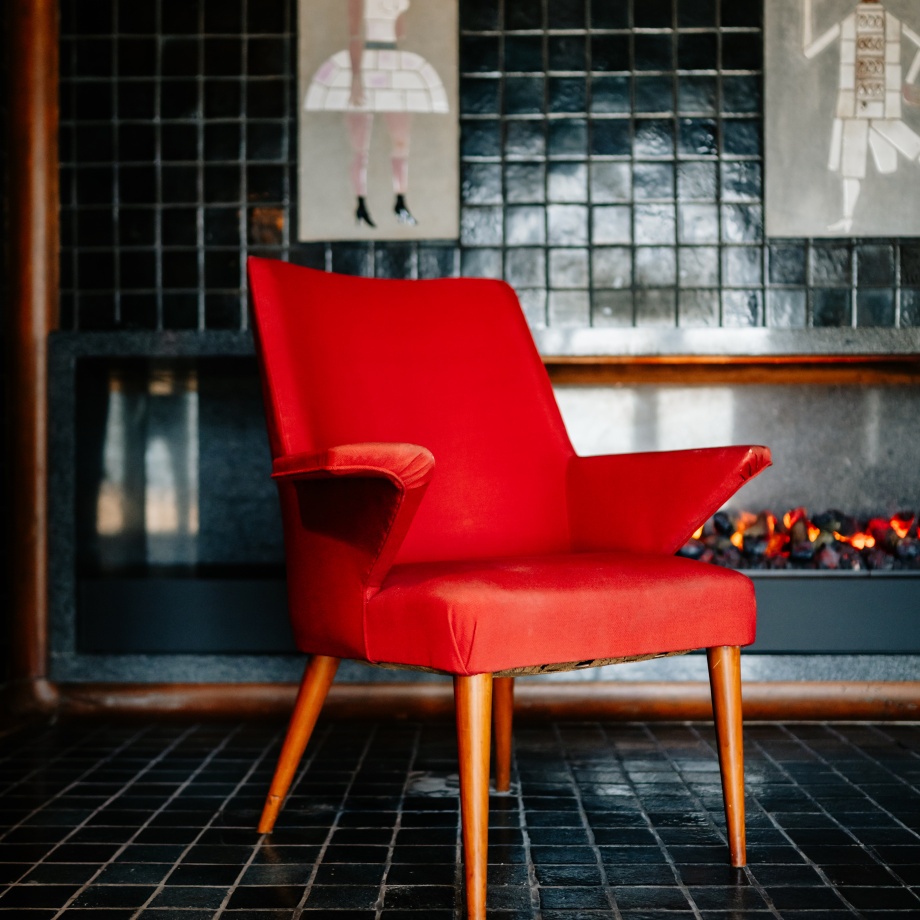
This hidden gem, completely covered with a mosaic of tiles, is a masterpiece from floor to ceiling. Playful figures, each the size of a playing card, appear between the tiles, based on a design by Belgian artist Pierre Caille.
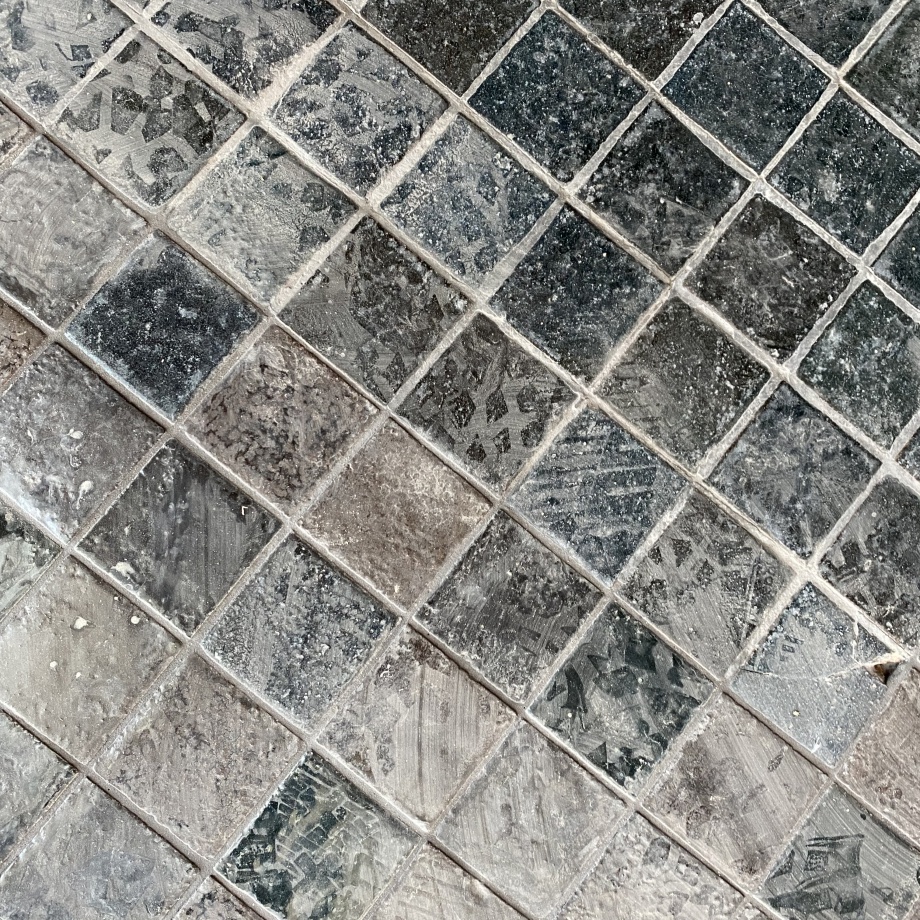
At first glance, the black tiles appear uniform, but a closer look reveals a subtle range of colors and sheens—they are less black than you might think.
The fireplace was recently carefully restored, with around a hundred tiles, mainly on the floor, being replaced.
There is no better place than by the fireside to dream away while watching an enchanting sunset.