Georges Grard
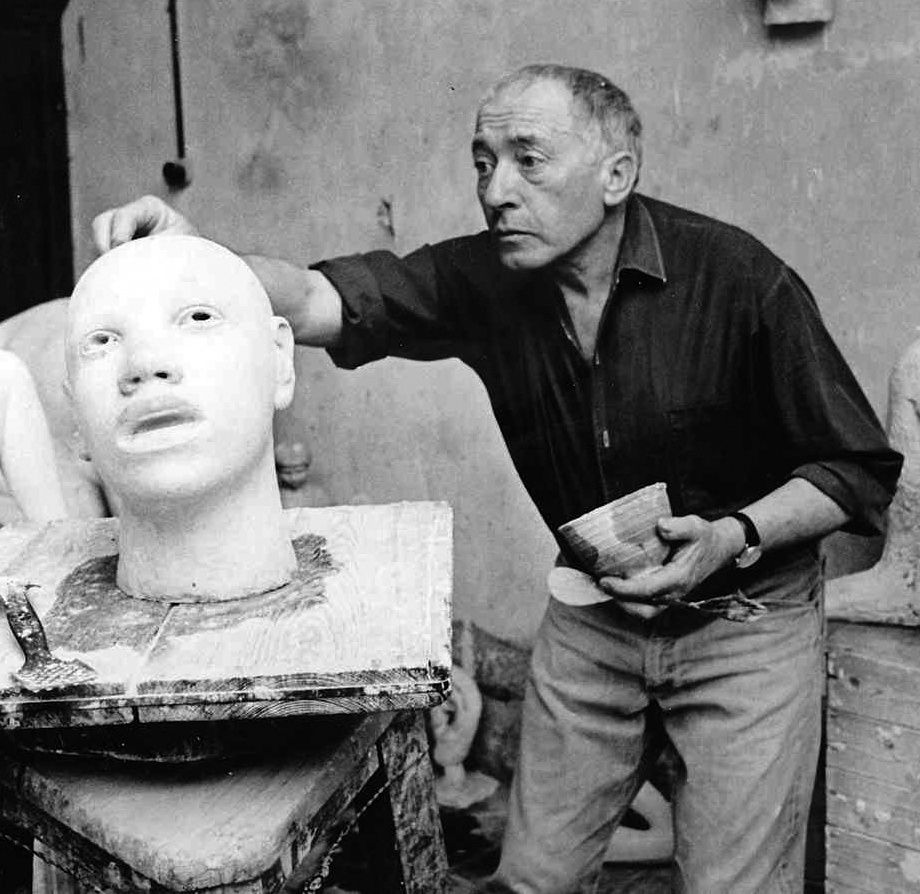
Georges Grard
After completing his studies in his hometown of Tournai, and drawn by the light, he moved to the seaside in 1931, to St. Idesbald. There, in a typical fisherman’s cottage, he created his most important works. His friend and colleague Pierre Caille posed for him on several occasions. Other notable contemporaries such as Haesaert, Tytgat and Delvaux also visited him regularly.He remained faithful throughout his life to a single theme: the female nude.
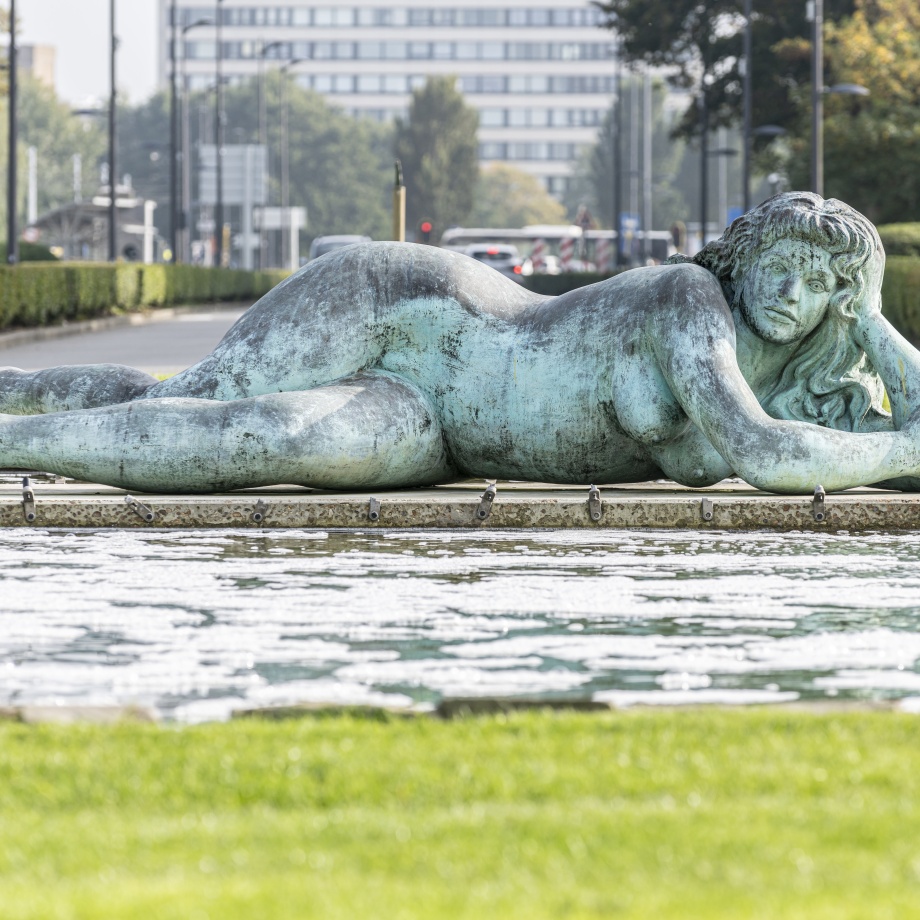
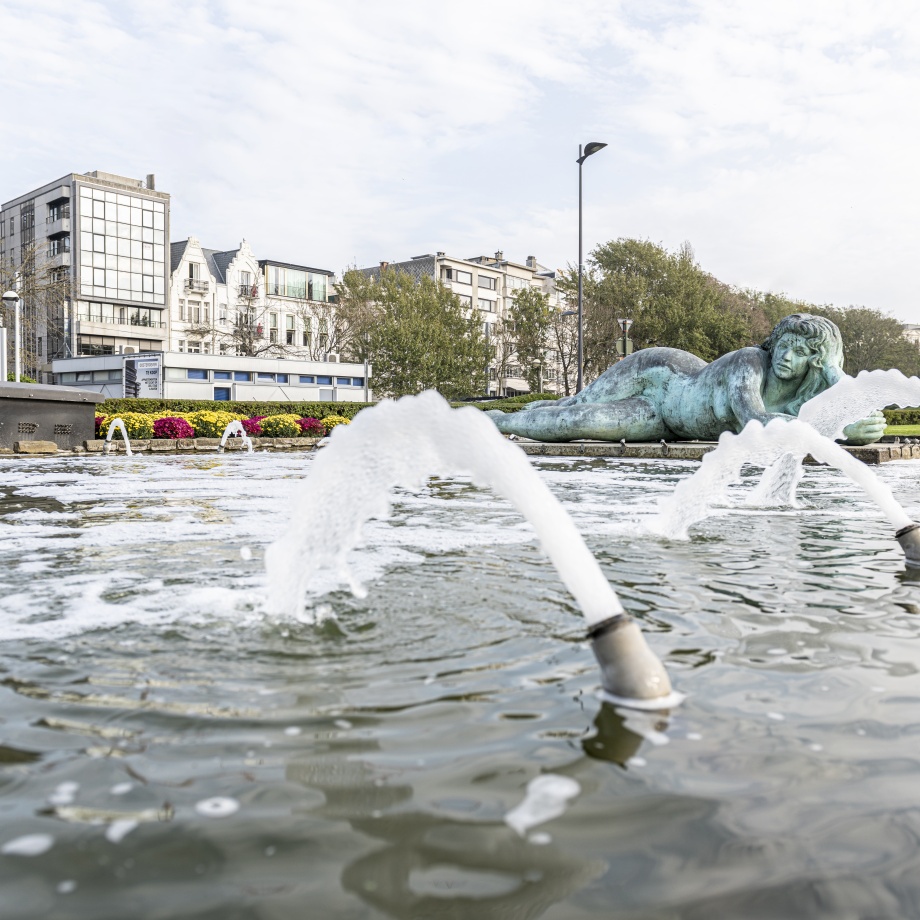
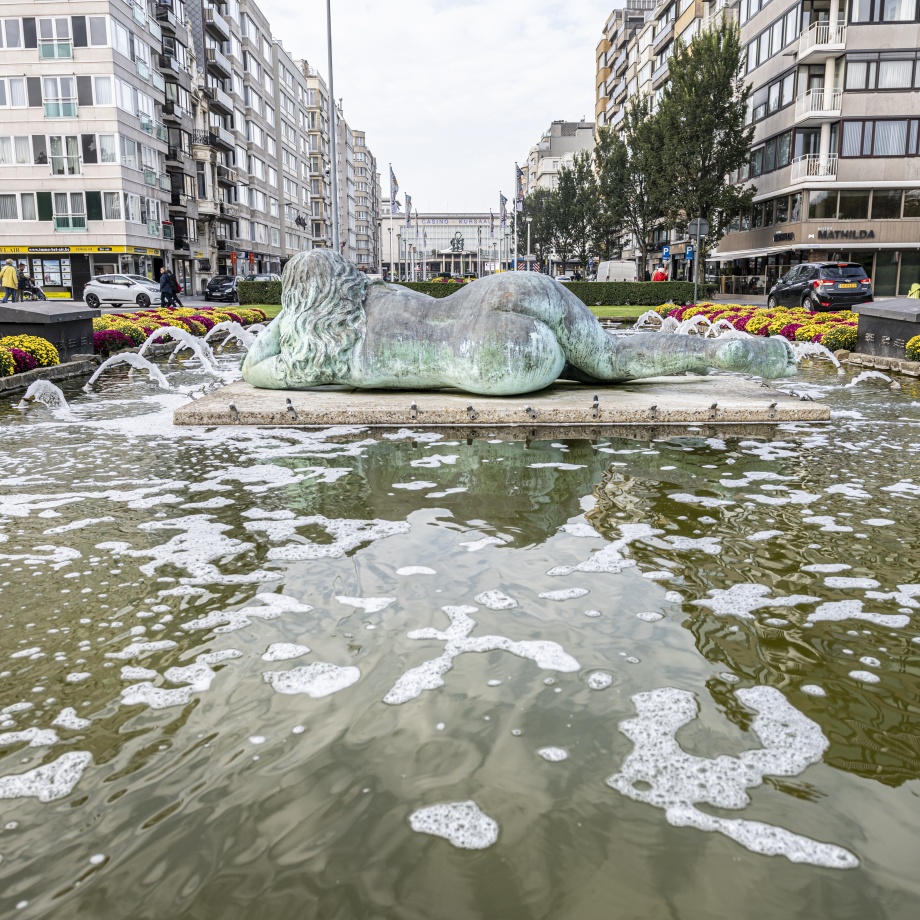
The large reclining female figure that Grard created for the Kursaal was named The Sea, but is better known locally in Ostend as Dikke Mathille. The reference to the sea is expressed through the stylisation of the hair, which suggests the movement of waves. Grard deliberately designed the sculpture to be viewed from below or at eye level, making the most of its placement.
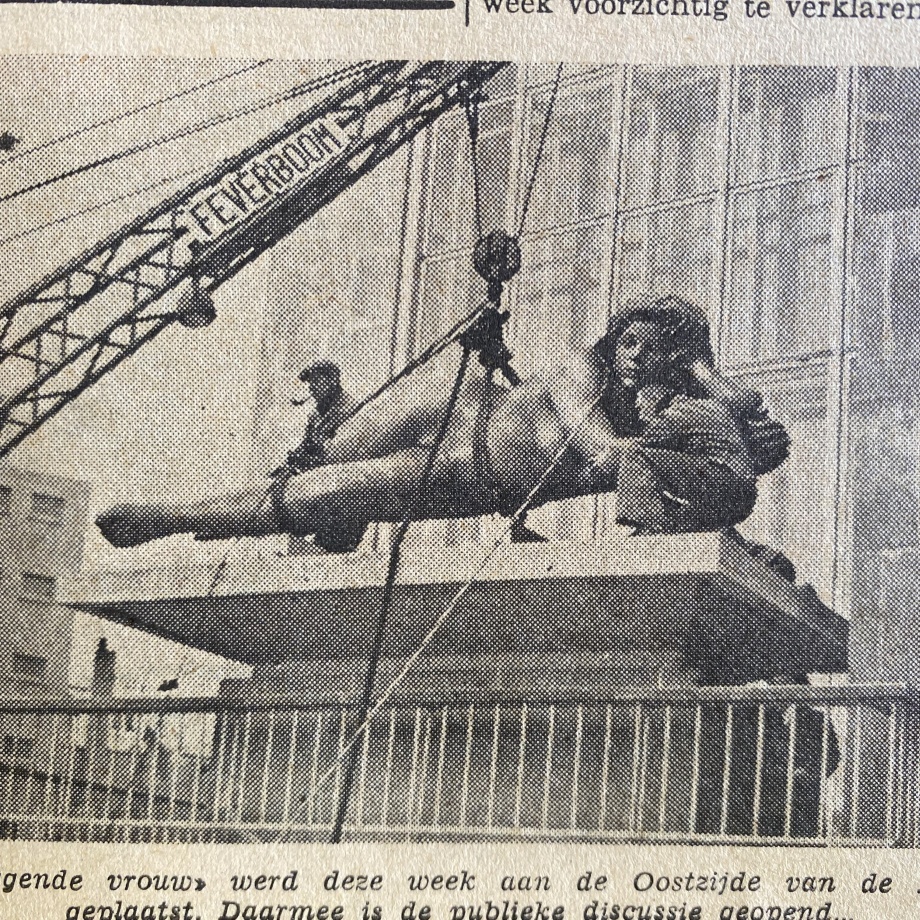
Despite its artistic qualities, the statue was considered too provocative in that position. In 1963, it was removed from its elevated pedestal on the seaside (eastern slope) and relocated to the garden with fountain on Leopold II Avenue. The empty pedestal near the casino still awaits its return.