The Kursaal Oostende Lounge: heritage with a modern twist
In September 2025, the Kursaal Oostende Lounge will reopen following a major renovation. What began as a reading room in 1953, designed by architect Léon Stynen (1899–1990), now shines once again in its original splendor. The renovation not only preserved the building’s heritage but also brought hidden gems back to life.
From Reading Room to Lounge
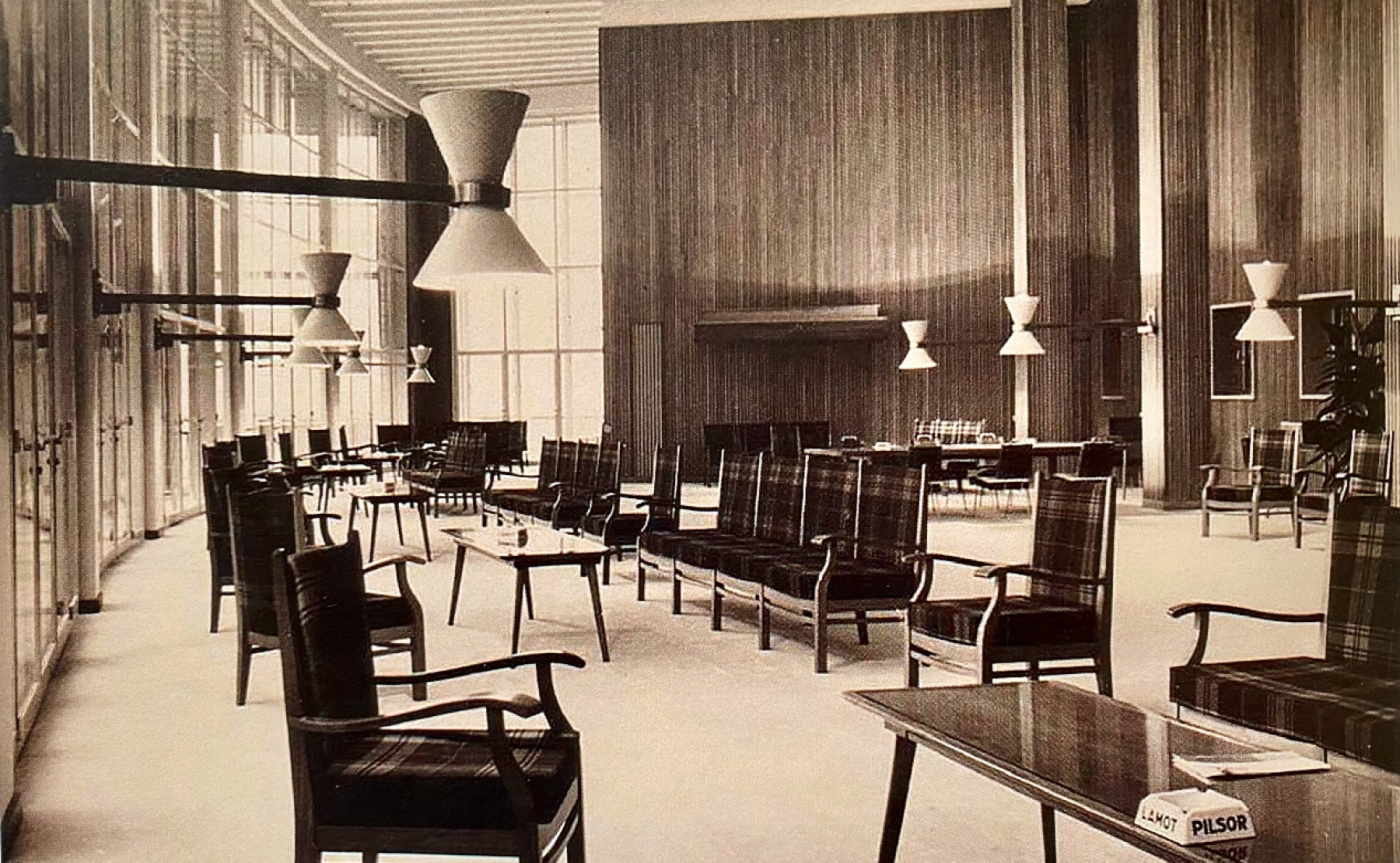
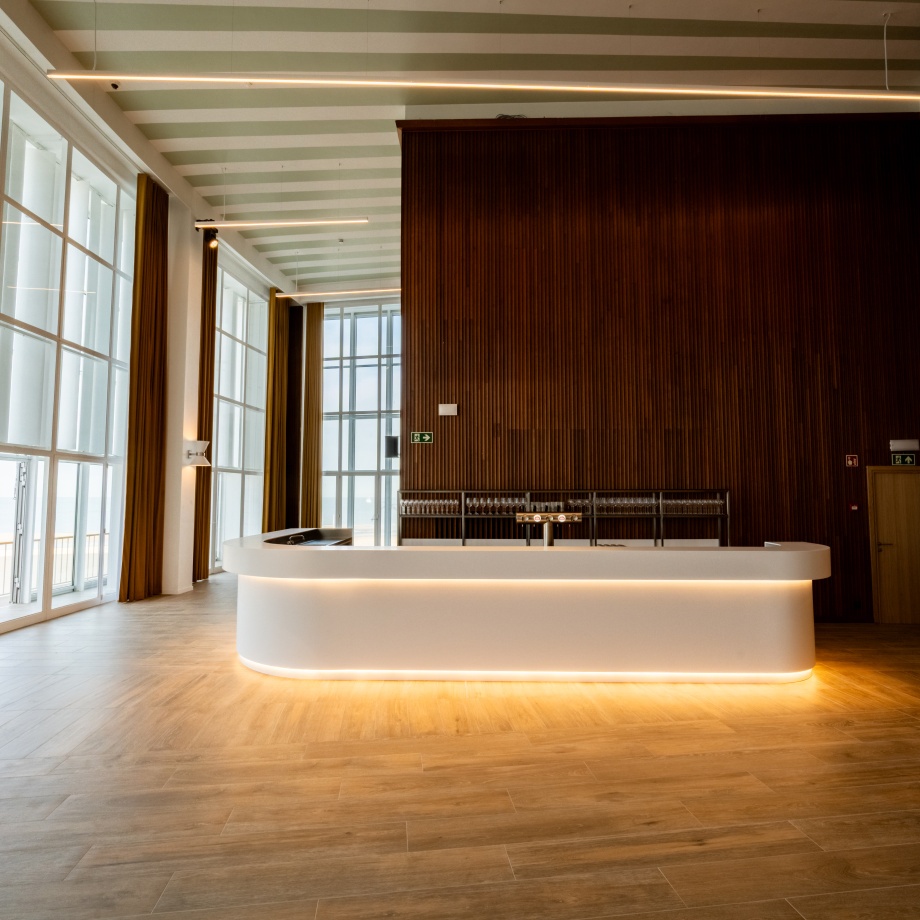
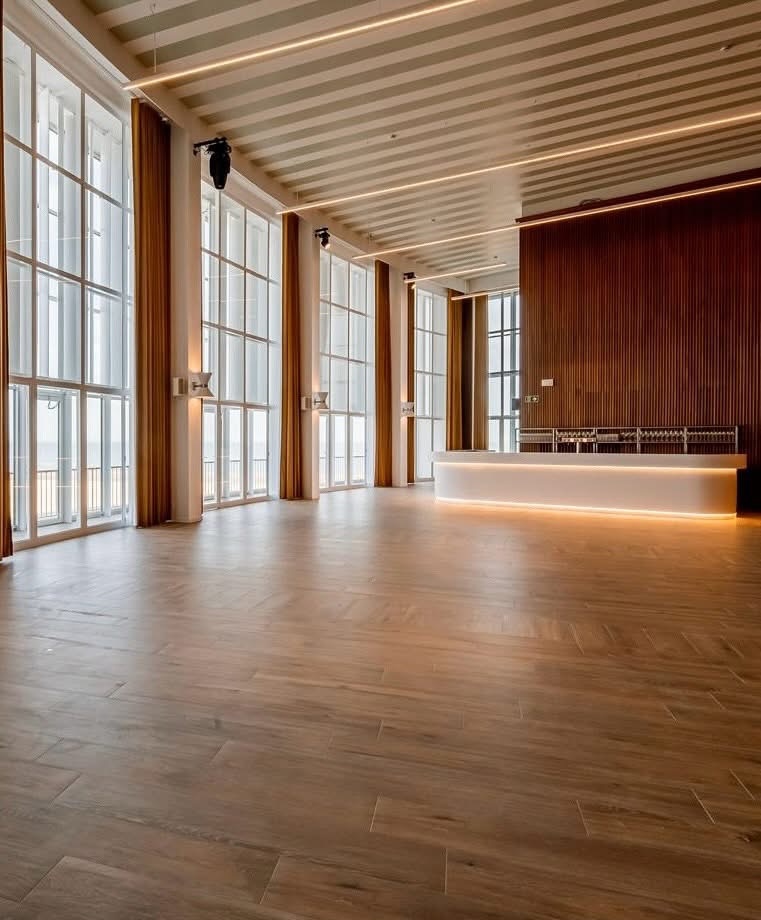
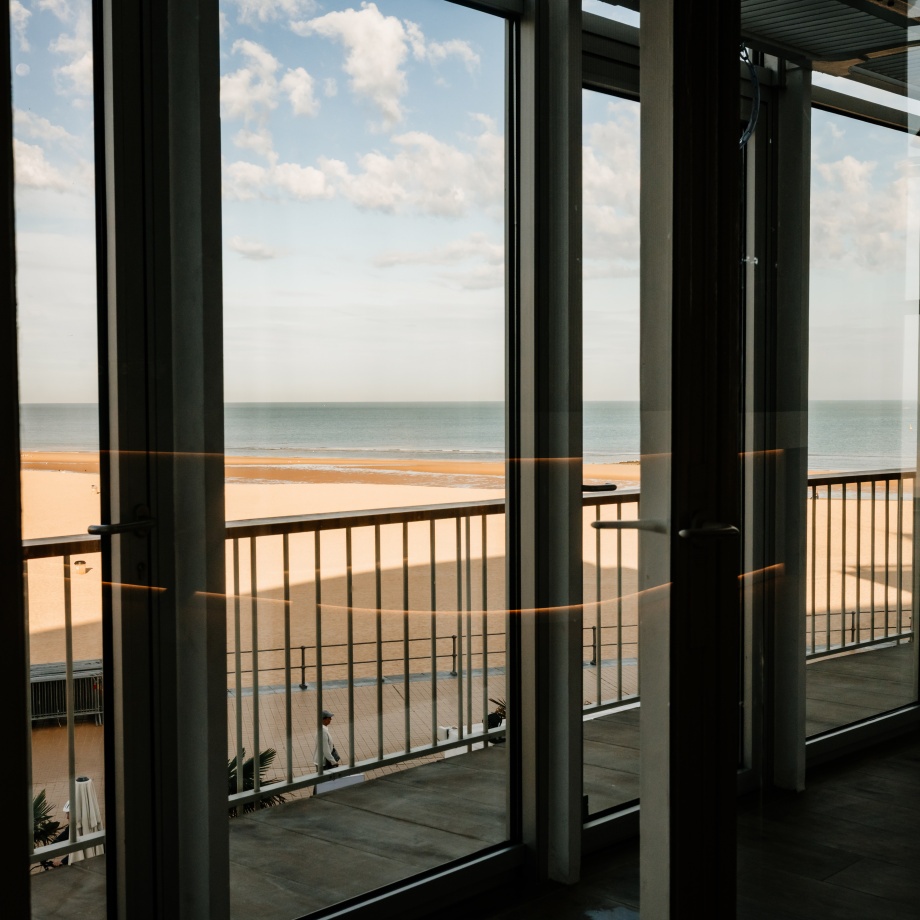
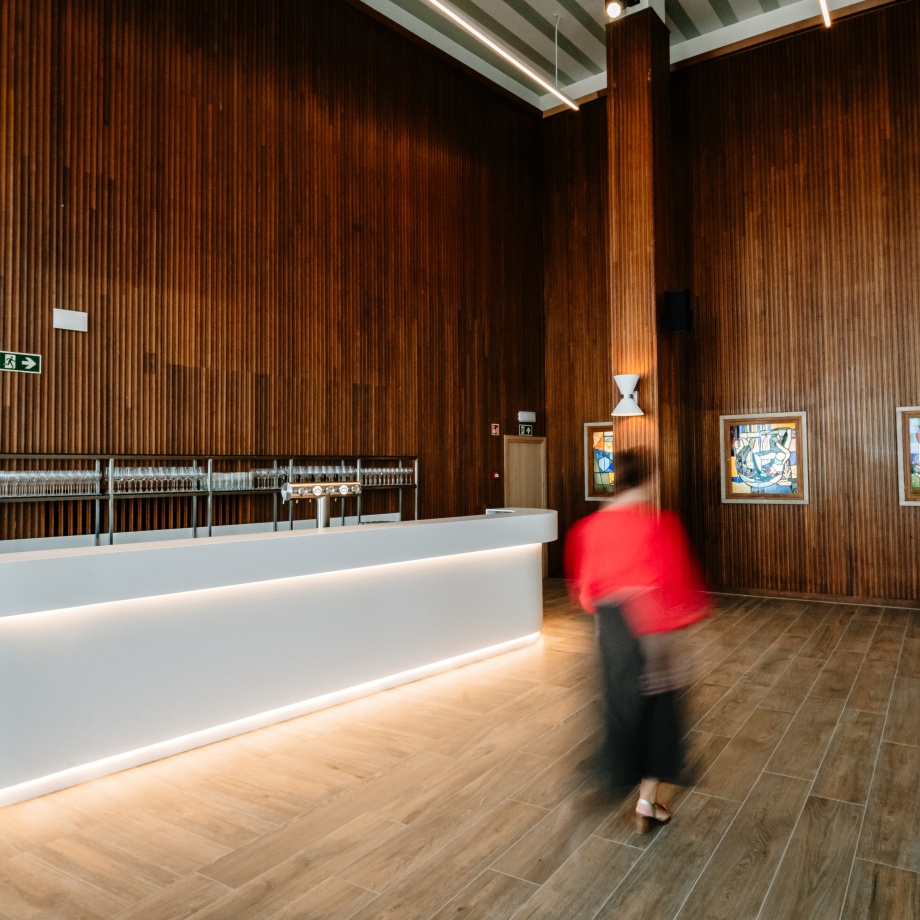
When the Kursaal opened its doors in 1953, the reading room was given a prominent place. Léon Stynen designed not only the architecture, but also the furniture and lighting. The space exuded tranquility and sophistication, with warm wooden paneling, an imposing ceiling, and large windows overlooking the sea.
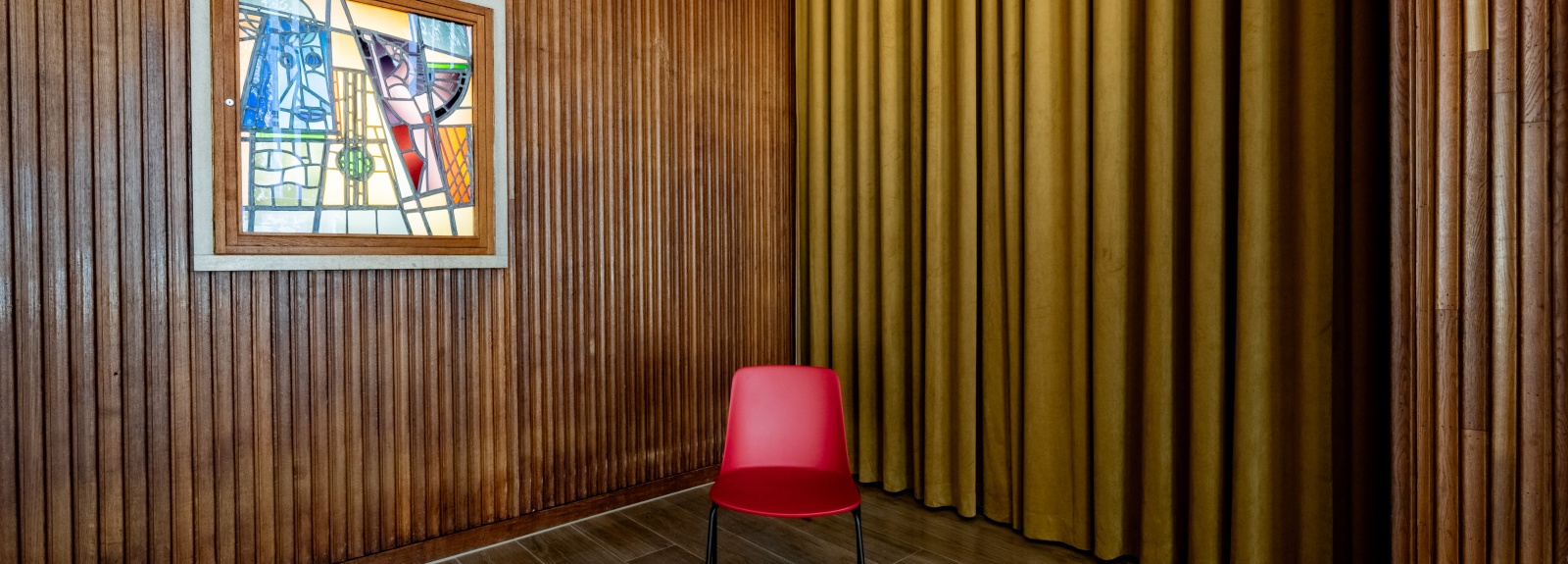
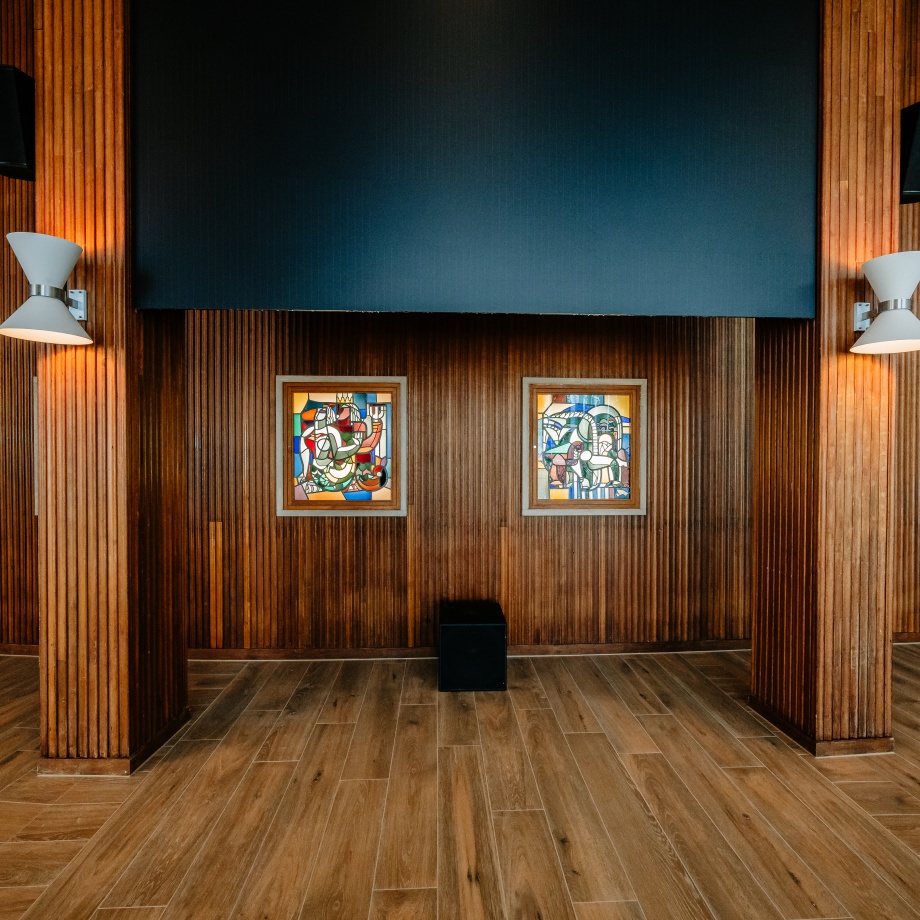
After decades of intensive use and renovations, the space has now been thoroughly renovated. The original features—paneled walls, ceiling, and curtains—have been meticulously restored. The stained-glass windows by artist Jo Maes (b. 1923), who previously contributed to the artistic design of the Ostend Pavilion at Expo ’58, have been restored to view and, thanks to indirect lighting, now shine in their original splendor of color.
Pierre Caille's Fire Pit
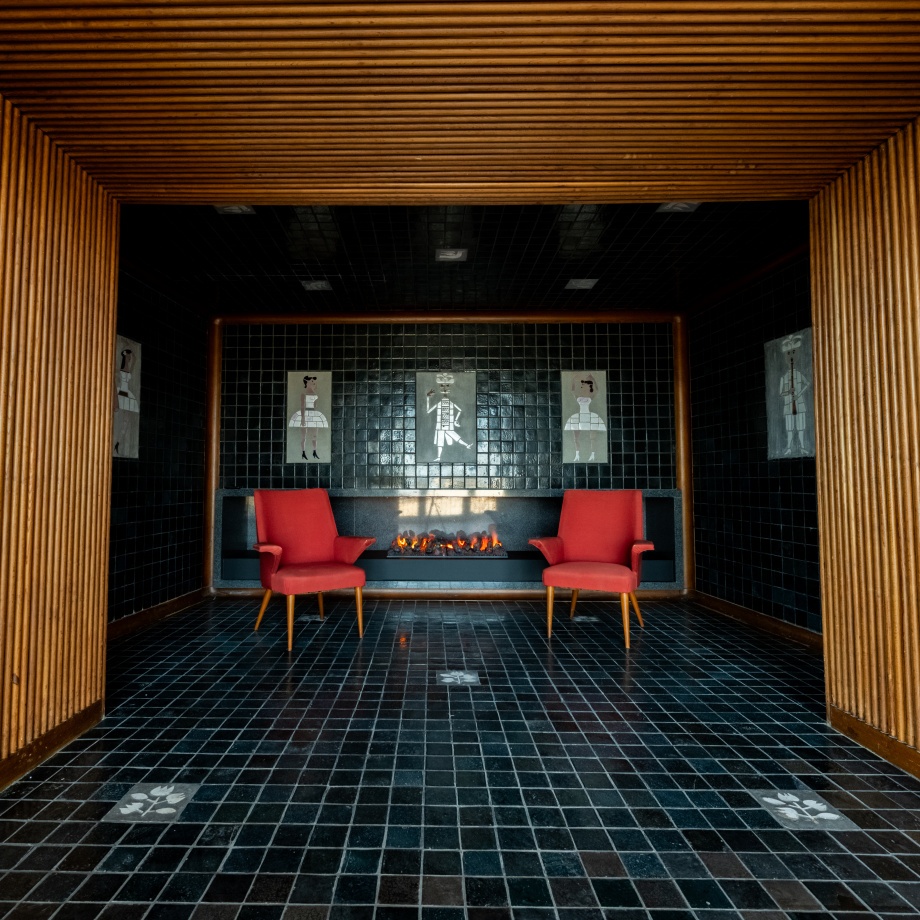
A distinctive feature of the Lounge is the ceramic fireplace by Pierre Caille (1911–1996), a renowned artist and professor at La Cambre art school. His creation, featuring black tiles and playful figures in playing-card format, adds a unique touch to the atmosphere. Thanks to a meticulous restoration in September 2025, this work of art can once again be admired. Stynen himself designed the iconic red chairs with embroidered crowns for the Belgian royal couple—a subtle detail that underscores the grandeur of the space.
La Cambre and Léon Stynen’s network
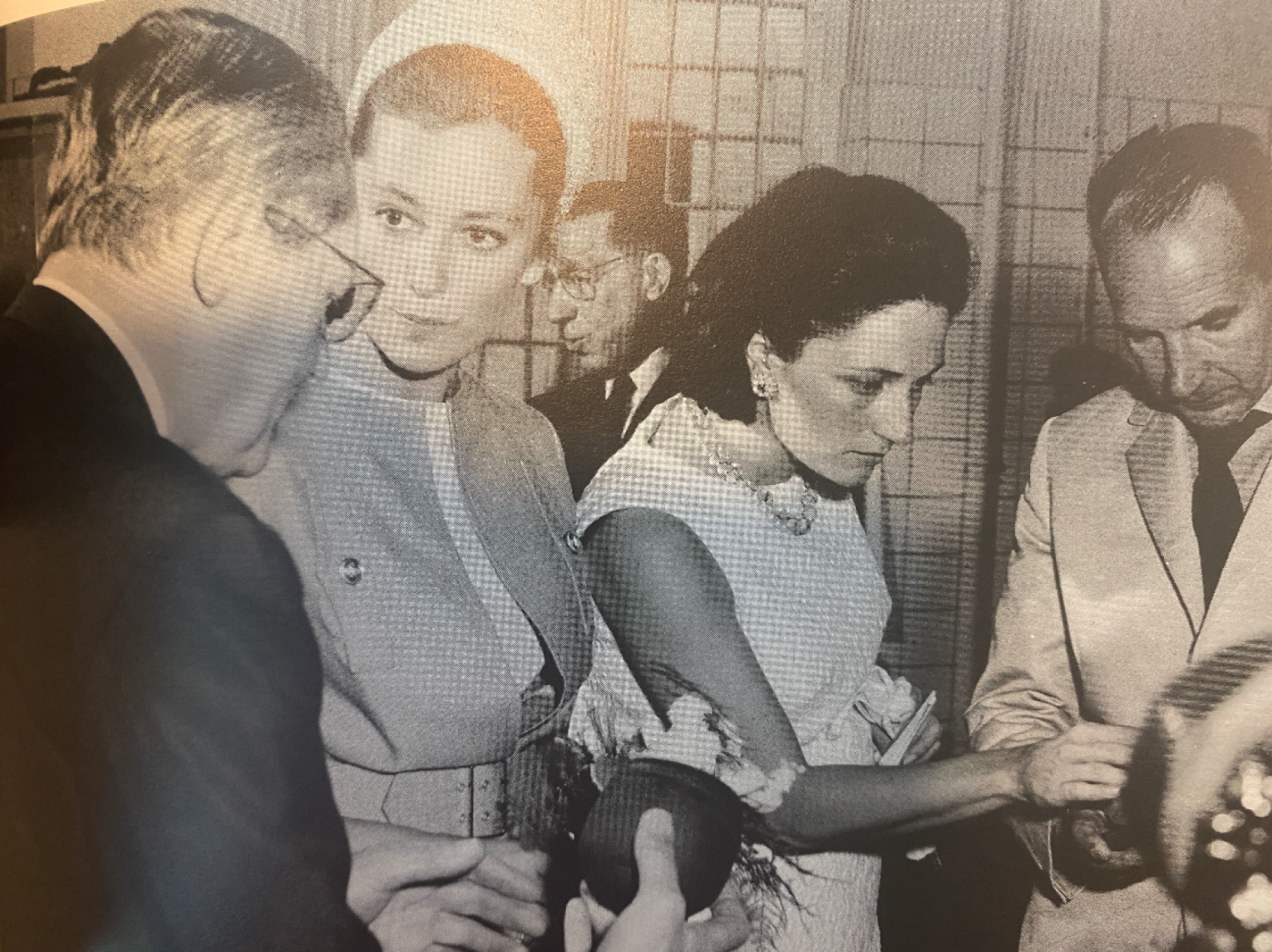
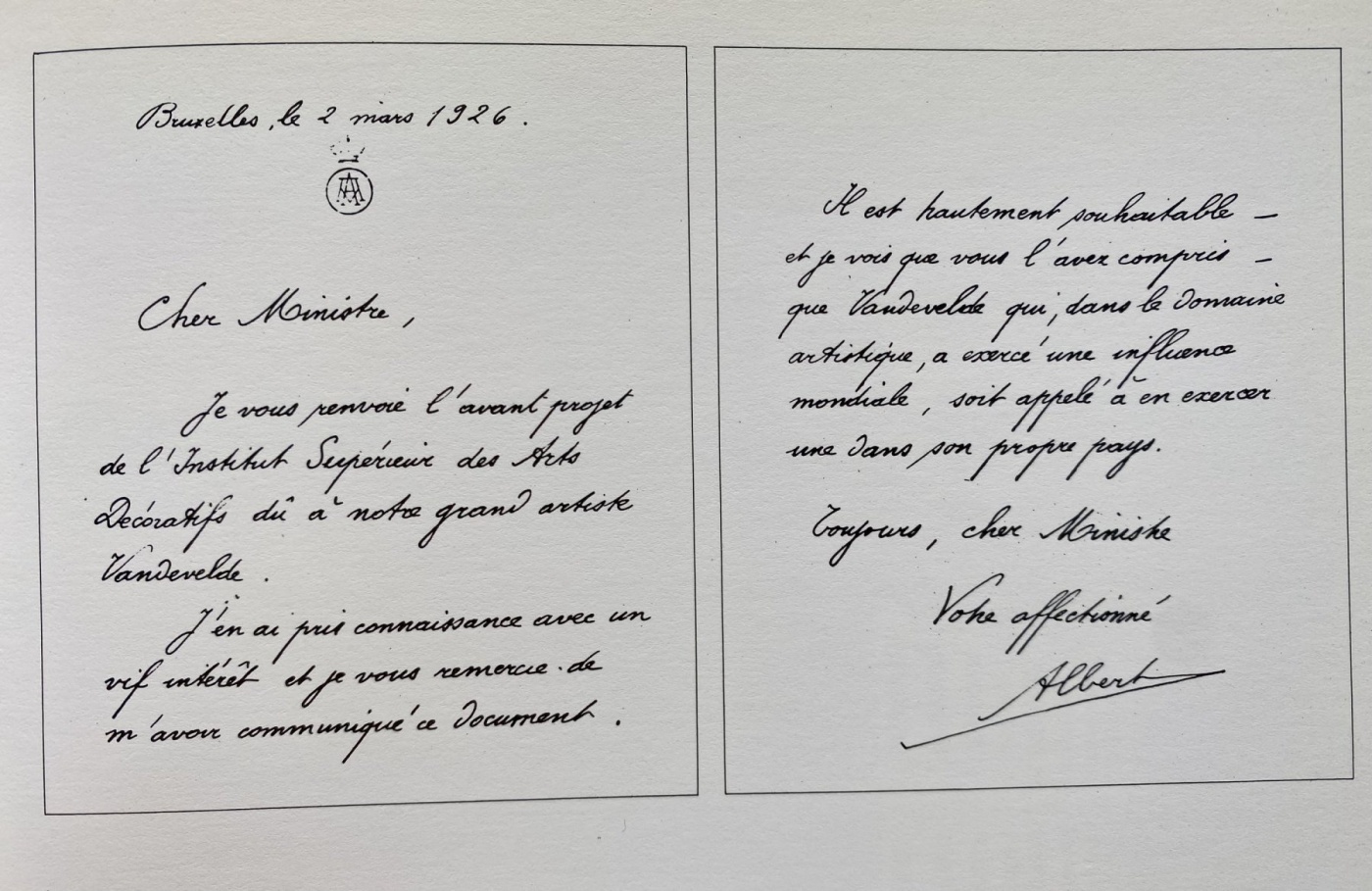
The close ties between Kursaal Oostende and the art world are no coincidence. From 1950 to 1965, Léon Stynen served as director of La Cambre, the Brussels art school founded in 1926 by Henry van de Velde with the support of King Albert I. Stynen shared not only a professional but also a personal friendship with Van de Velde. In his capacity as director, he involved several La Cambre faculty members in the integration of art into the Kursaal. In this way, he challenged artists to create experimental work, which still helps define the building’s identity today. A striking historical photograph from 1963 shows Stynen at La Cambre, where he receives King Baudouin and introduces fellow faculty member Pierre Caille. A year later, Princess Paola visited the ceramics studio, accompanied by Stynen and Caille—a sign of the close intertwining of architecture, art, and royal patronage.
Art and architecture in harmony
The Kursaal is more than just an iconic seaside building. It is a fusion of architecture and art, a place where masters such as Stynen, Maes, and Caille have left their mark. Thanks to the recent renovation, this rich heritage is not only being preserved but also being given a new lease on life.
The reopening of the Lounge is therefore more than just an architectural restoration: it is a tribute to the vision of Léon Stynen, who saw art and architecture as inextricably linked.