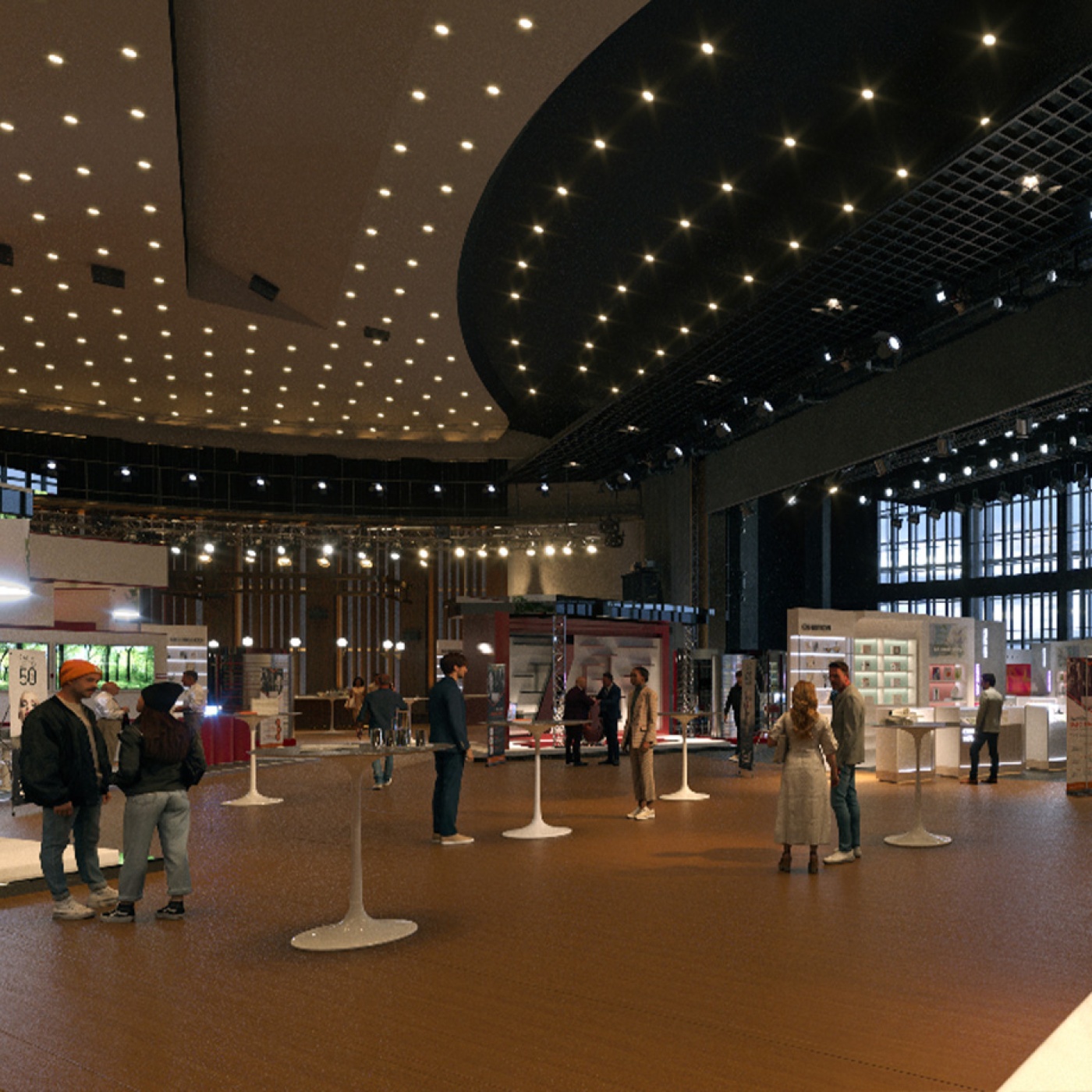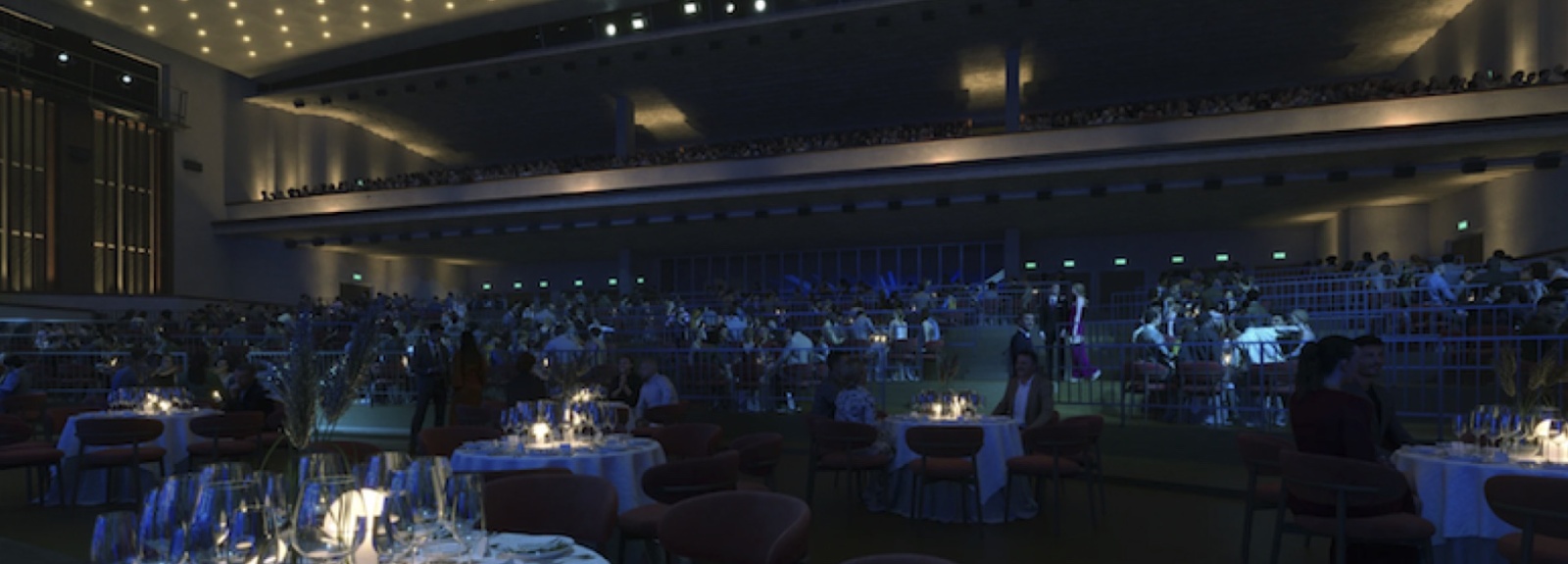
Kursaal Oostende unveils the largest modular concert hall in Belgium.
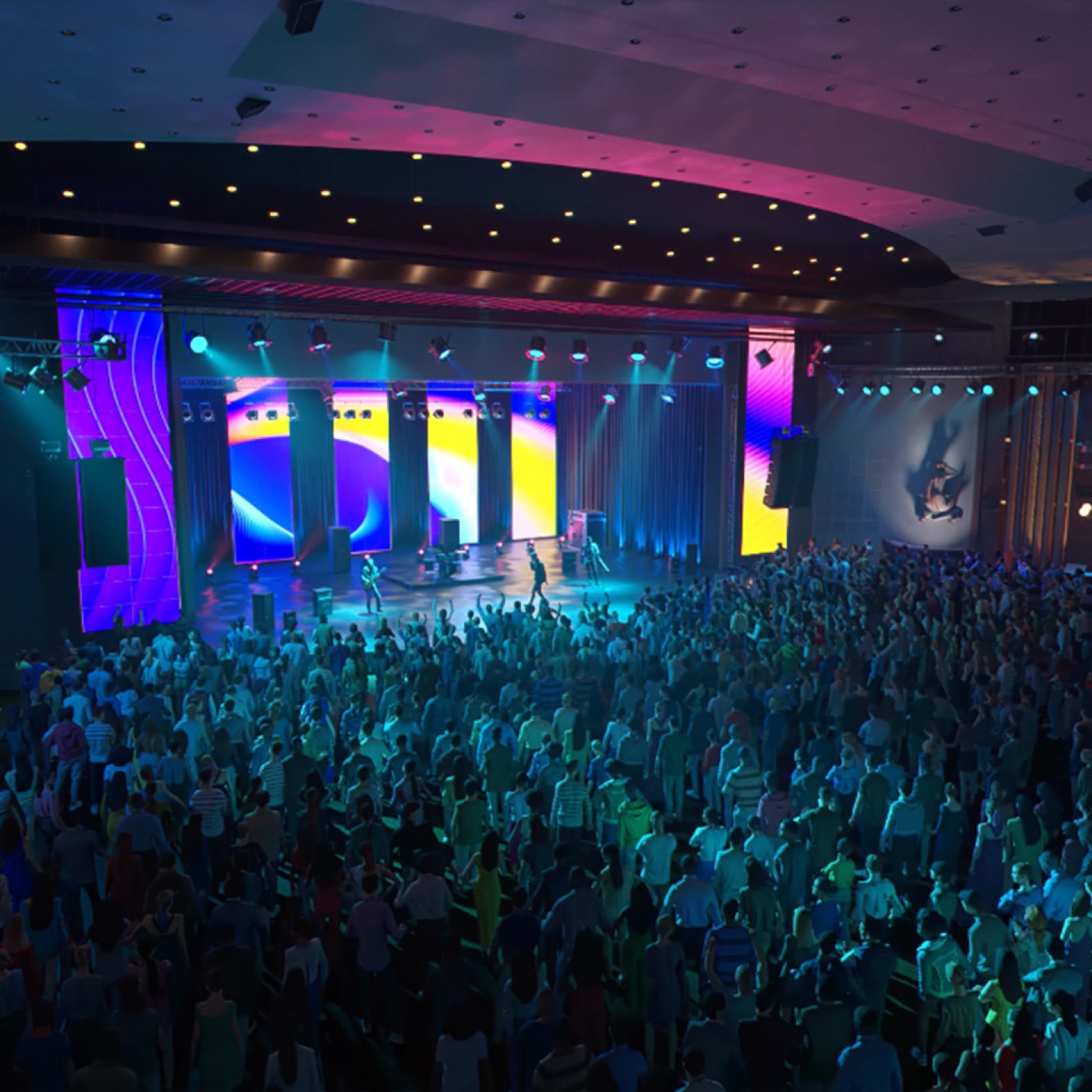
Kursaal Oostende will, from 2026 onwards, be able to host not only seated shows but also standing pop and rock concerts. To realise this ambition, the Kursaal is investing 25 million euros in the concert hall, together with the Flemish Government, the Province of West Flanders, the City of Ostend, and the project developer NV EKO.
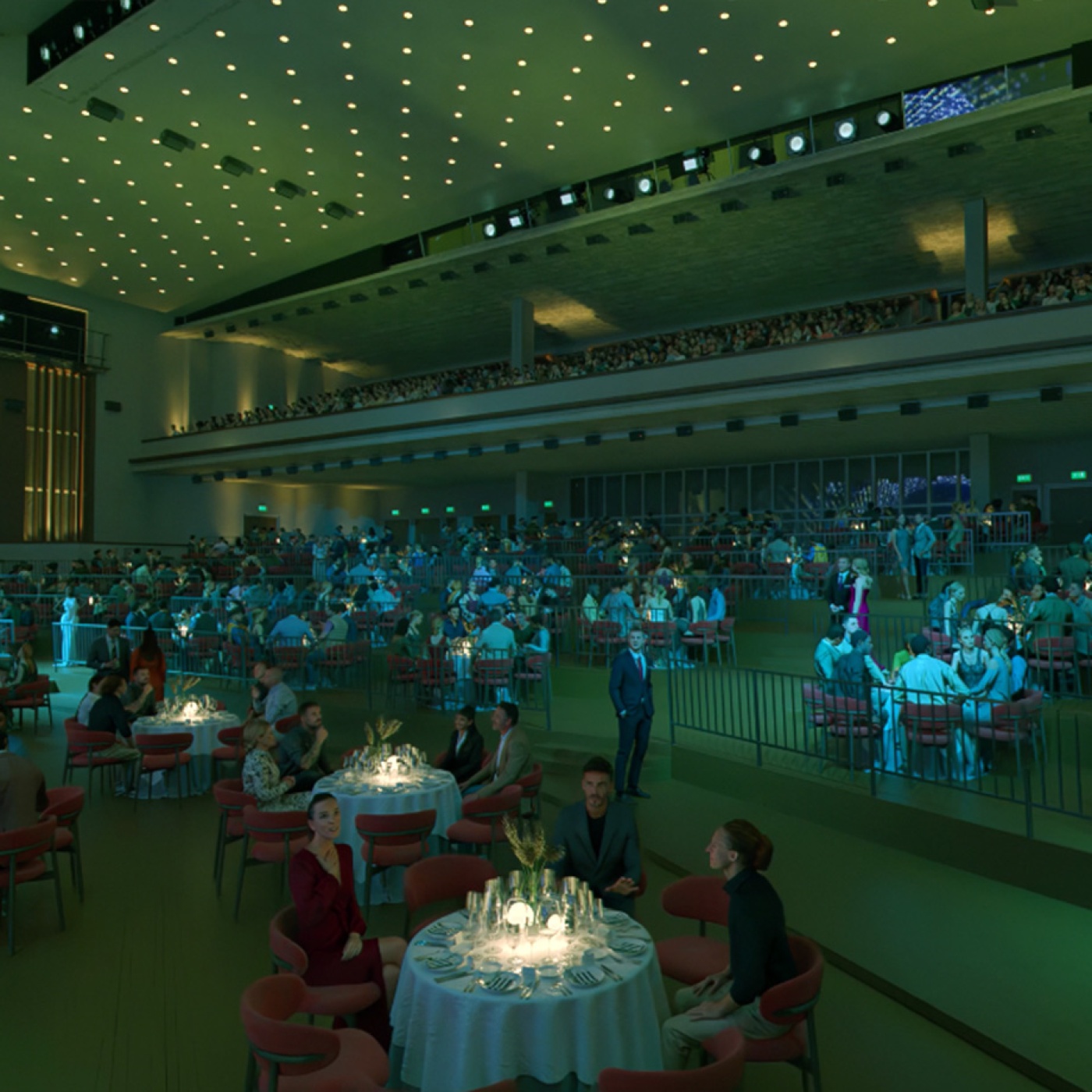
Thanks to a new dynamic floor system, the capacity of the existing auditorium will be increased to more than 3,000 people, making Kursaal the largest concert hall west of Brussels and Antwerp. In addition, comfort for trade fairs, conferences, and banquets will be significantly improved. The impressive seafront window will become an integral part of the hall, restoring its original purpose as envisioned by architect Leon Stynen. With this transformation, Kursaal Oostende aims to attract a younger audience and position itself as a key player on the international concert circuit. During the works, the other halls of Kursaal Oostende will remain open as usual. Construction will start in October of this year.
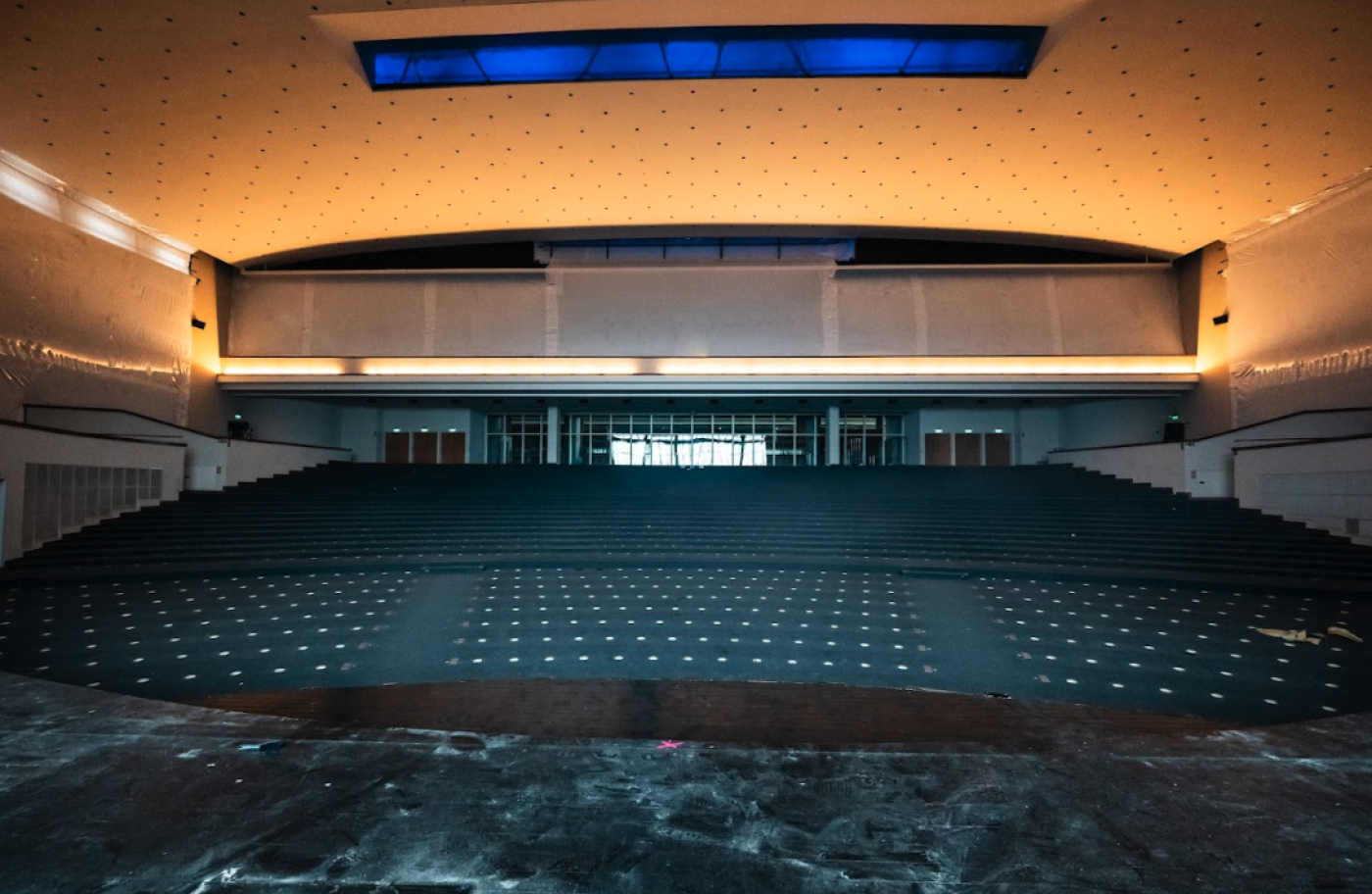
Kursaal Oostende has been an iconic landmark since 1953 and is known as an architectural gem by architect Leon Stynen. Over the years, the building has been renovated and restored several times, preserving its historic grandeur. However, to align the venue with its current ambitions, a thorough renovation of the concert hall is necessary.
“Every year, we welcome more than 250,000 visitors to our beautiful venue. In the past, however, we regularly had to pass on interesting artists who only wanted to perform for a standing audience. When we discovered a modular seating system, we immediately explored how we could integrate it into our existing infrastructure. It turned out to be a real game changer: we will be able to host a seated concert one day and a standing rock concert the next. This means we not only preserve today’s comfort but also gain several additional assets.”
— Peter Craeymeersch, Director of Kursaal Oostende
More than 3.000 concertgoers
The biggest changes will take place beneath the floor surface. New technologies will be installed there to give the venue a fully multifunctional character. Thanks to mechanical lifts under the hall, the entire floor area, including the stage, will be height-adjustable and independently controllable. The red seats will be able to disappear into the floor, allowing the entire hall to be reconfigured in no time to suit each event. This makes it possible to level the audience floor with the stage—offering a stunning view of the beach and the sea—or the other way around.This will create a vast 1,700 m² floor space and a concert hall where more than 3,000 concertgoers can enjoy a performance in a state-of-the-art venue. With this high-tech innovation, Kursaal Oostende achieves a Belgian first: it will become the largest hall in Belgium capable of changing its layout in this way.
Hierdoor krijg je een gigantische vloeroppervlakte van 1.700 vierkante meter en een concertzaal waar meer dan 3.000 concertgangers zullen kunnen genieten van een optreden in een state of the art zaal. Door dit hoogtechnologische snufje heeft Kursaal Oostende meteen een Belgische primeur beet. Het wordt de grootste zaal van België die op deze manier van indeling zal kunnen veranderen.
“These advantages also apply to the B2B segment. In the different configurations we can apply, we will not only be able to host large banquets in the current auditorium, but also fairs, and we will expand our conference capacity. All of this with a stunning sea view, which makes the experience even more attractive.”
— Gwen Nys, Deputy Director of Kursaal Oostende
The works in the concert hall will take two years. During that period, only the auditorium will be closed. The other halls of Kursaal will remain open for events whenever the works allow.
Impact op Ostend
This renovation will not only have a major impact on Kursaal itself, but also bring a positive boost to the city of Ostend. Thanks to this project, Kursaal Oostende aims to increase its annual visitor numbers from 250,000 to 330,000.
“Kursaal is an economic engine for our city and attracts around 250,000 visitors each year. Of these, about 60% go to a restaurant before or after the show, and 30% also book an overnight stay nearby. Thanks to this new hall, visitor numbers will only increase. The impact on hospitality will grow further, with more overnight stays and more people eating or drinking locally before or after their performance or concert. Moreover, with standing concerts we can also attract a younger audience, reinforcing our ambition as a contemporary cultural city.” — Bart Tommelein, Mayor of Ostend and Chairman of Kursaal Oostende
The cultural importance of Kursaal Oostende is unquestionable. It is one of the city’s most iconic landmarks, a building that has given many people wonderful experiences in the past. With this renovation, Kursaal Oostende not only aims to preserve its historical heritage, but also to prepare the venue for a strong and future-proof role ahead.
Backstage and Lounge Bar
At the same time as the concert hall, the backstage areas and the Lounge Bar will also be redesigned. By making the backstage more comfortable and pleasant, Kursaal aims to offer artists an even better welcome than today. A large kitchen will be added, along with a welcoming foyer space where artists can enjoy warm meals. The dressing rooms will be given a new, cosy design, and the shower facilities will also be upgraded.
“We have the ambition to position Kursaal Oostende worldwide as a state-of-the-art concert and event venue. In the seating configuration of the concert hall, the historical character of this building will fully come into its own. This vision is extended into the Lounge Bar, located on the western side of the hall. It will become a brand-new VIP area for 280 guests, where visitors can enjoy a drink before or after the show. In addition, the lounge can also be used as an extra conference room. Its main asset is the stunning view of the beach and the sea through its large glass façades.”
— Björn Anseeuw, Chairman of NV EKO and First Alderman of the City of Ostend.
Cost: 25 million euros
Such major transformations naturally come with a significant cost, amounting to 25 million euros, funded by various parties. The Flemish Government provides a subsidy of 9 million euros. The Province of West Flanders and the West Flemish Intermunicipal Cooperation contribute 400,000 euros via the regional fund. An additional 100,000 euros comes from the tourism impulse scheme of the Province of West Flanders. The developer NV EKO contributes 4 million euros, while the remaining 11.5 million euros will be covered through operational financing.
“The Flemish Government is investing in cultural infrastructure across Flanders through the recovery plan Flemish Resilience. This also includes the Kursaal in the City by the Sea. I hope that in a few years a magnificent stage will rise here where artists from near and far can shine. In this way, we can further position Flanders as a creative and innovative top region.”
— Jan Jambon, Minister-President of Flanders
“The Coast is an important year-round tourist destination, offering a contemporary range of indoor and outdoor experiences. With a strong offer in the renewed multifunctional hall of Kursaal Oostende, the coast can position itself more than ever, both nationally and internationally, as a holiday destination with numerous cultural and tourist assets.”
— Sabien Lahaye-Battheu, Deputy for Tourism and Recreation and Chair of Westtoer.
Following the works up close
The goal is to complete everything by August 2026 so that the doors can reopen in September 2026. During the works, Kursaal Oostende will communicate via its social media channels: TikTok, Instagram, Facebook, and YouTube. This will allow everyone to follow the renovation closely. In addition, visitor moments will be organised so the public can experience the works live. Practical details will be announced later.
This project is coordinated by B2AI Architects in collaboration with Ingenium, Laurent Ney and Daidalos, as well as the Kursaal project team. The consortium Putman - Artes Depret acts as the main contractor for the works.