
Art on stage and off stage
There is no doubt that the Kursaal in Ostend is an iconic architectural gem. But did you know that Léon Stynen, the architect, was also active in art circles? In fact, from 1950 to 1964, he served as director of La Cambre. It is therefore no coincidence that the new Kursaal attracted artists like a magnet in the 1950s. Today, you can still admire more than 12 authentic masterpieces throughout the building.
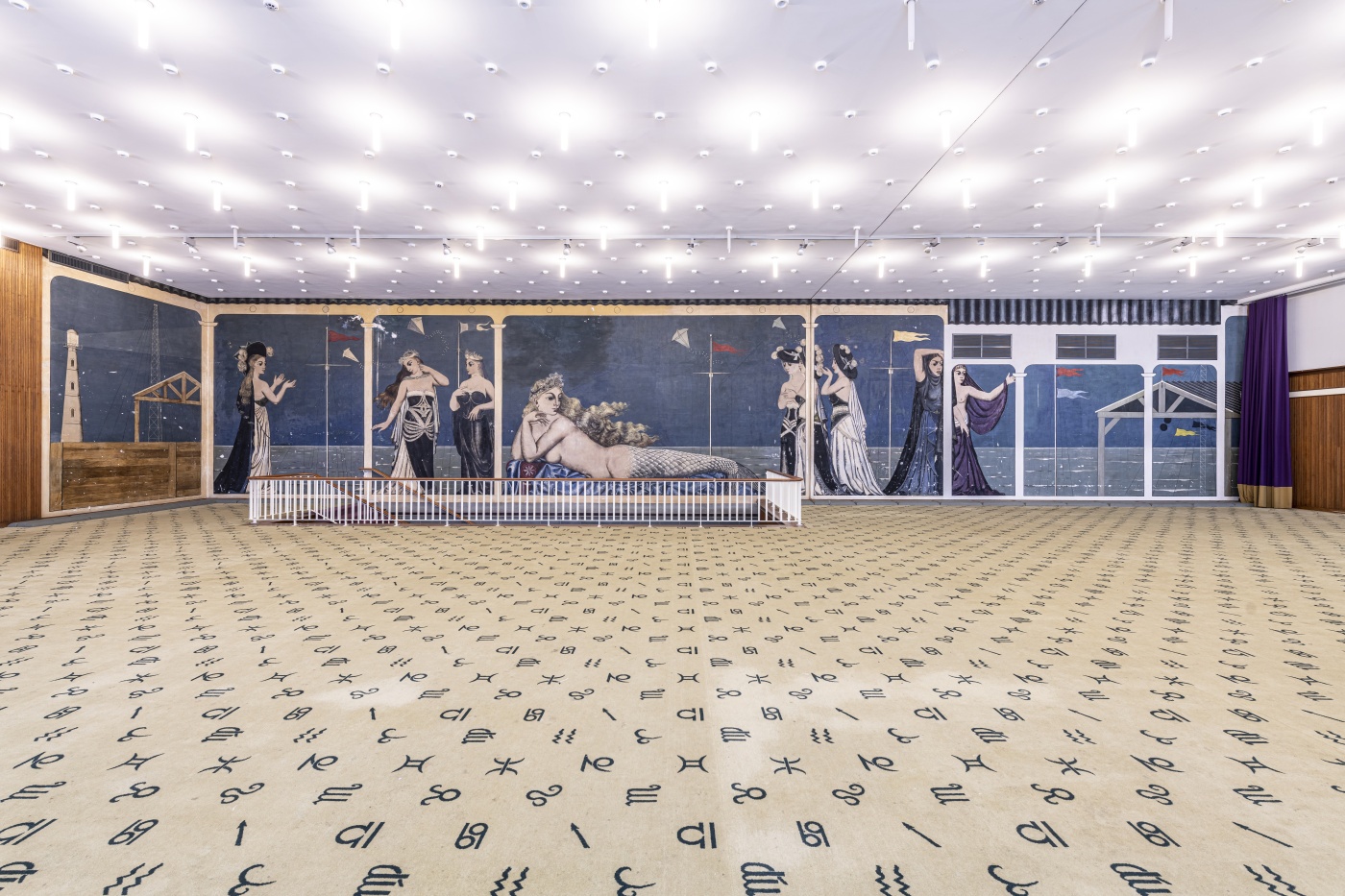
During World War II, cultural life was virtually impossible. Cultural looting was, in fact, rampant. It is therefore no surprise that art flourished more than ever in the 1950s. Various styles gained momentum, often carrying strong symbolic meaning. As a result, a number of Belgian artists achieved great international renown. Among them were Paul Delvaux and seven of his contemporaries, who left their mark at the Kursaal in Ostend. From ceramics to frescoes. From sculptures to tapestries. You can discover it all. In this blog, we’ll take a closer look at some of these masterpieces.
Art treasures in the Hall of Fame
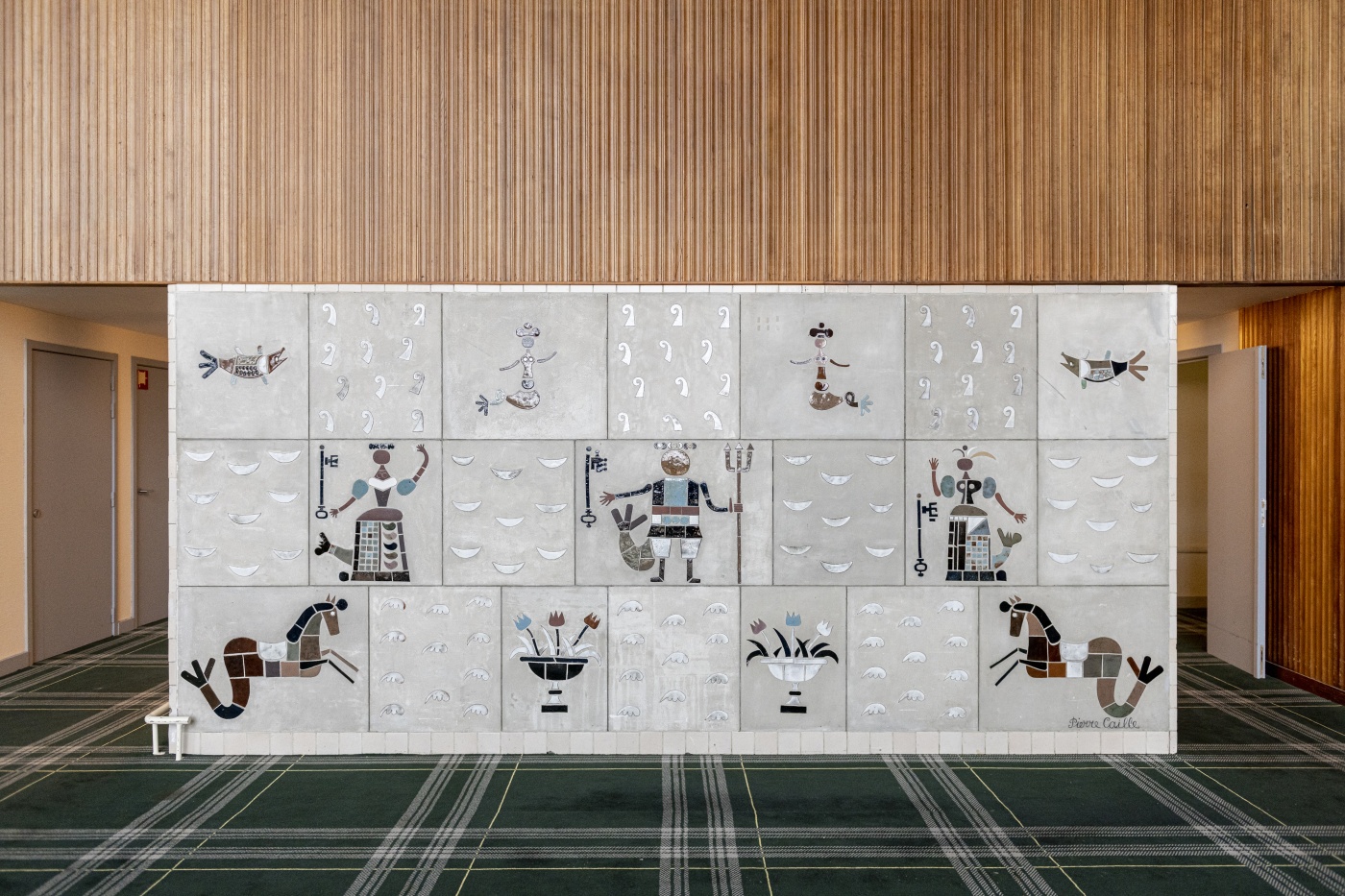
In the Hall of Fame alone, works by Pierre Caille, Edgard Tytgat, and Julien Van Vlasselaer can be found. Exotic female figures, incorporating delicate mosaics, adorn a ceramic wall. This playful yet stylized creation is the work of Pierre Caille, a pioneer in ceramics and sculpture. Two more gems by his hand: the decorative, sienna-colored frieze with a recurring motif of clouds, waves, and fish; as well as the ceramic windscreen with marine motifs at the top of the staircase leading to the Hall of Honor.
If you love Greek mythology, be sure to admire the work of the Flemish expressionist Edgard Tytgat, which depicts the embarkation of Iphigenia. It is one of Tytgat’s last major works.
A tapestry is inextricably linked to the design sketch that precedes it. This sketch captures the color blocks, the character, and the composition. Julien Van Vlasselaer’s forty-square-meter tapestry sketch is therefore of exceptional artistic value. It symbolizes the two aspects of the sea: at times stormy, at other times calm and idyllic.
A stunning harmony with the architecture
There’s even more art to be spotted in and around the Kursaal. Sculptor Olivier Strebelle created “Triton” and “Mermaid,” two original ceramic sculptures standing about two meters tall.
The walls of the hall balcony, meanwhile, feature works by Marc Mendelson. They resemble large beach umbrellas that simulate the undulating motion of the sea. A truly unique interaction with the architecture!
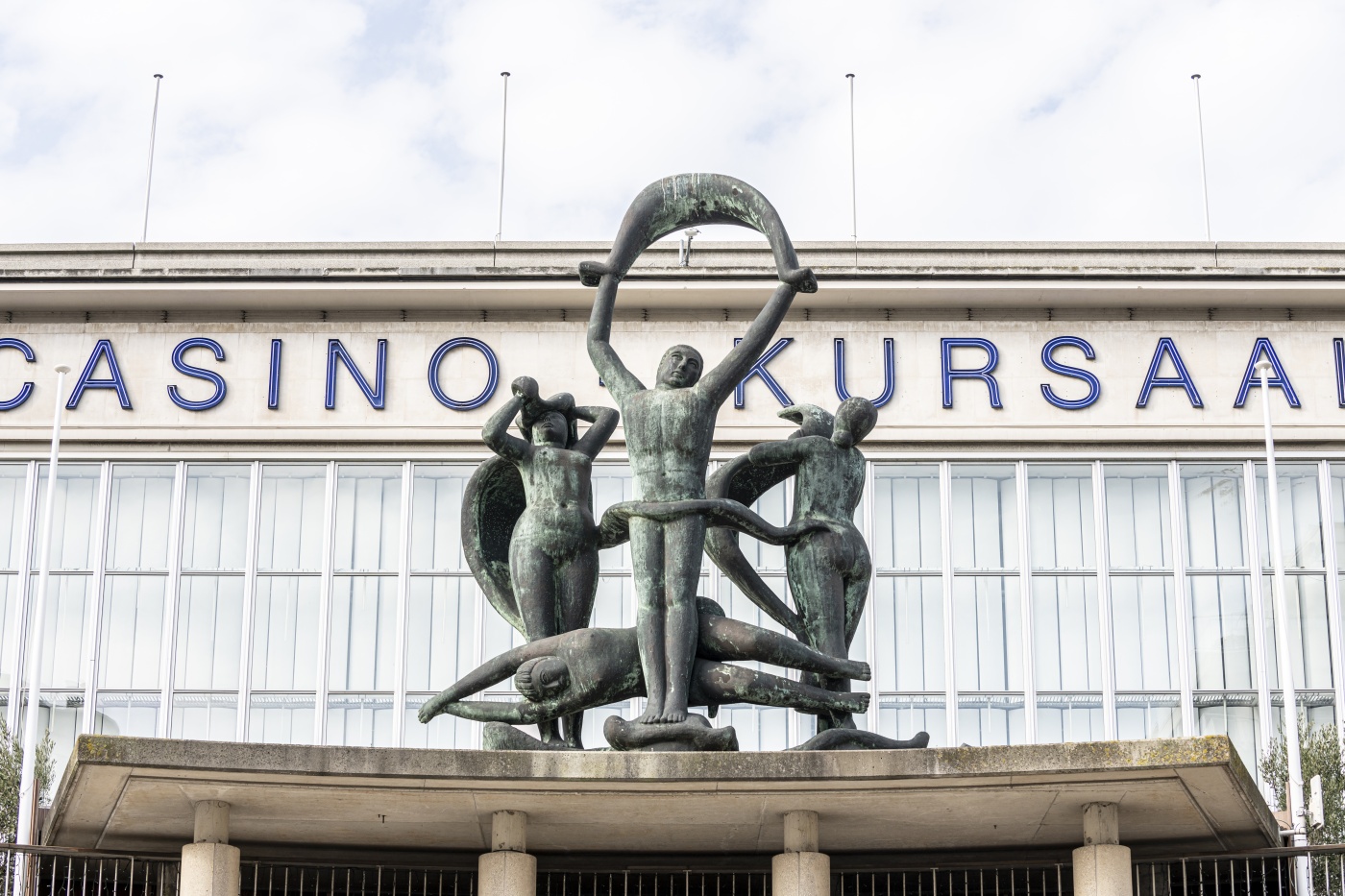
If there is one work of art that cannot fail to catch your eye, it is Oscar Jespers’ monumental bronze sculpture atop the canopy at the entrance to the Kursaal. The Flemish sculptor, who caused a sensation from Maastricht to Boston, succeeded like no other in harmoniously and gracefully depicting the four elements (water, fire, earth, and air).
Did you know:
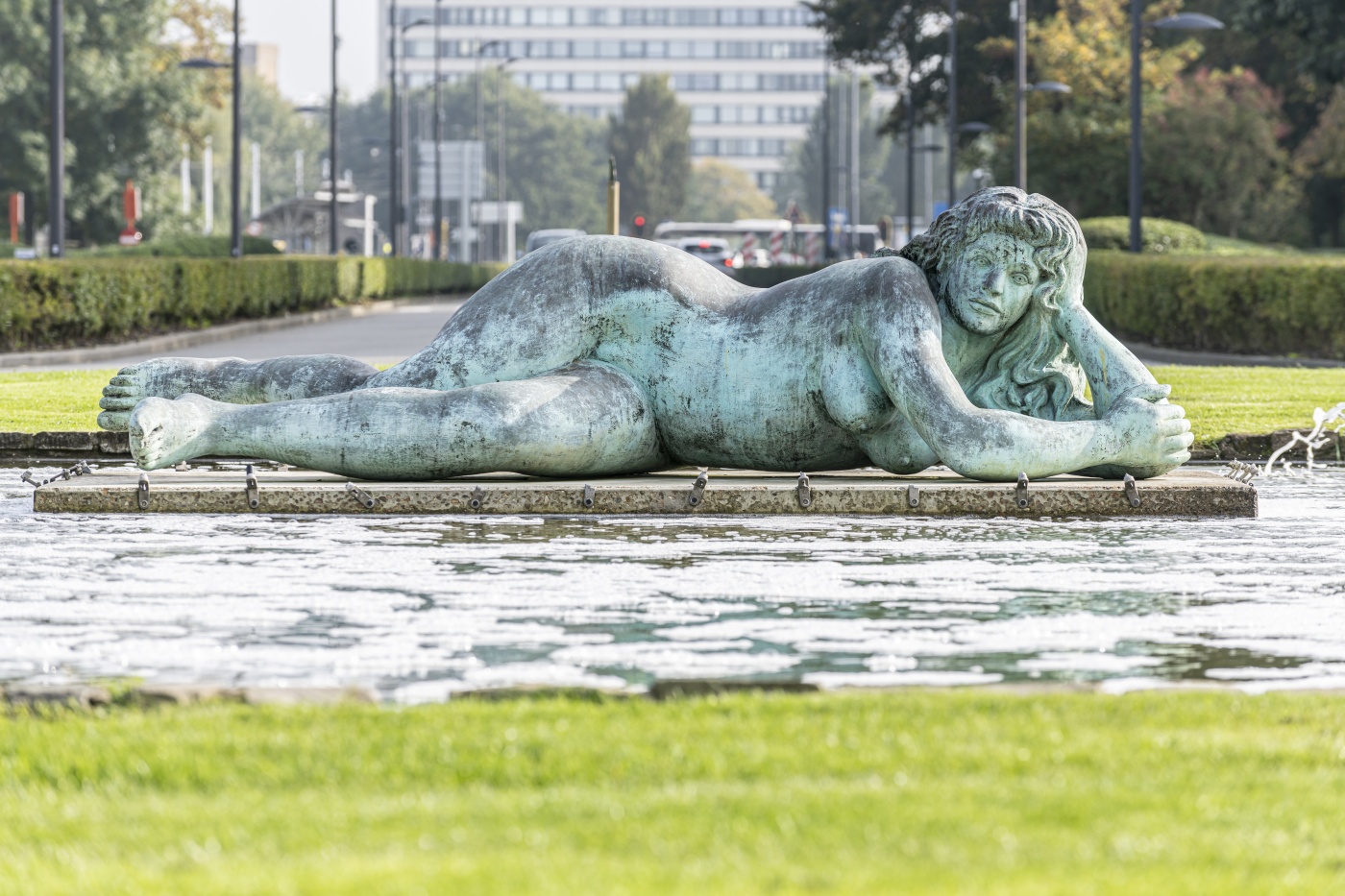
“Fat Mathille”—who hasn’t heard of her? The massive sculpture—depicting a reclining, nude woman—is by Georges Grard. The sculpture symbolizes the opulence and sensuality of the sea.
Throughout his career, Grard remained faithful to a single theme: the female nude. This time, however, it sparked controversy. As a result, “The Sea” was removed from its original location on the exterior of the Kursaal (on the Oosthelling side). Since 1963, it has served as a figurehead when entering Ostend via Leopold II Avenue. Who knows, perhaps ‘Dikke Mathille’ will one day return ‘home’...?
A tribute to the great master
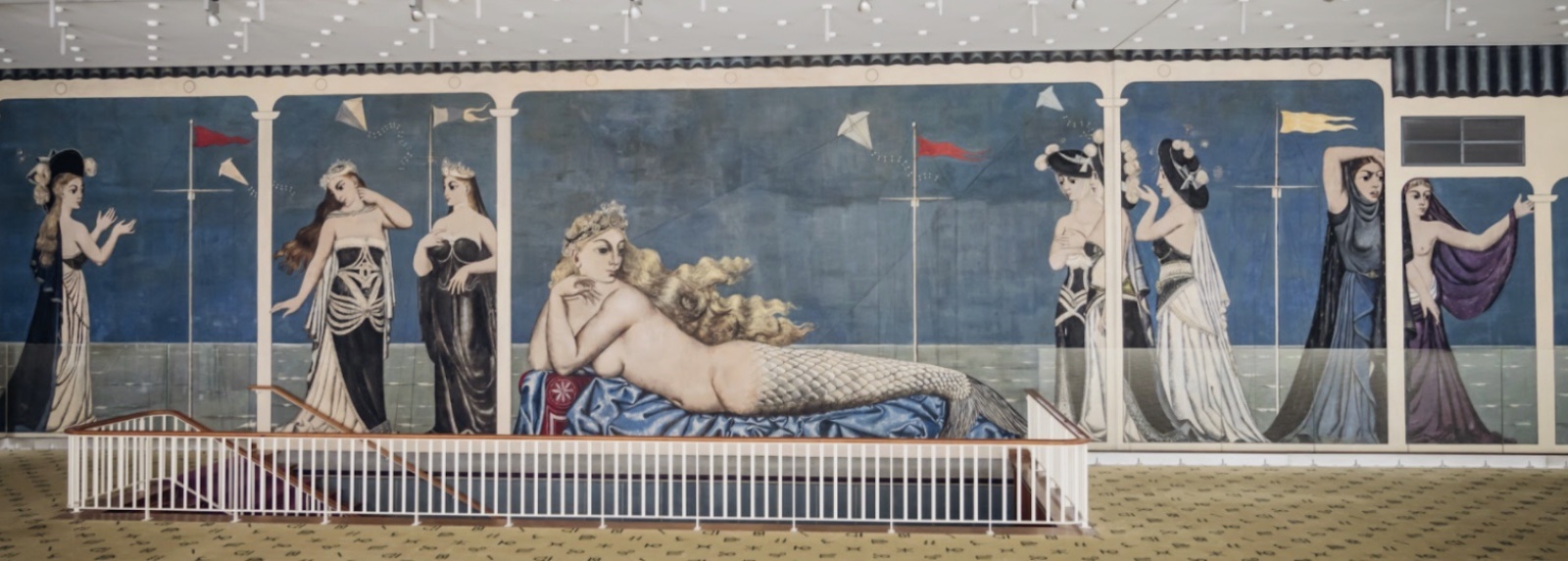
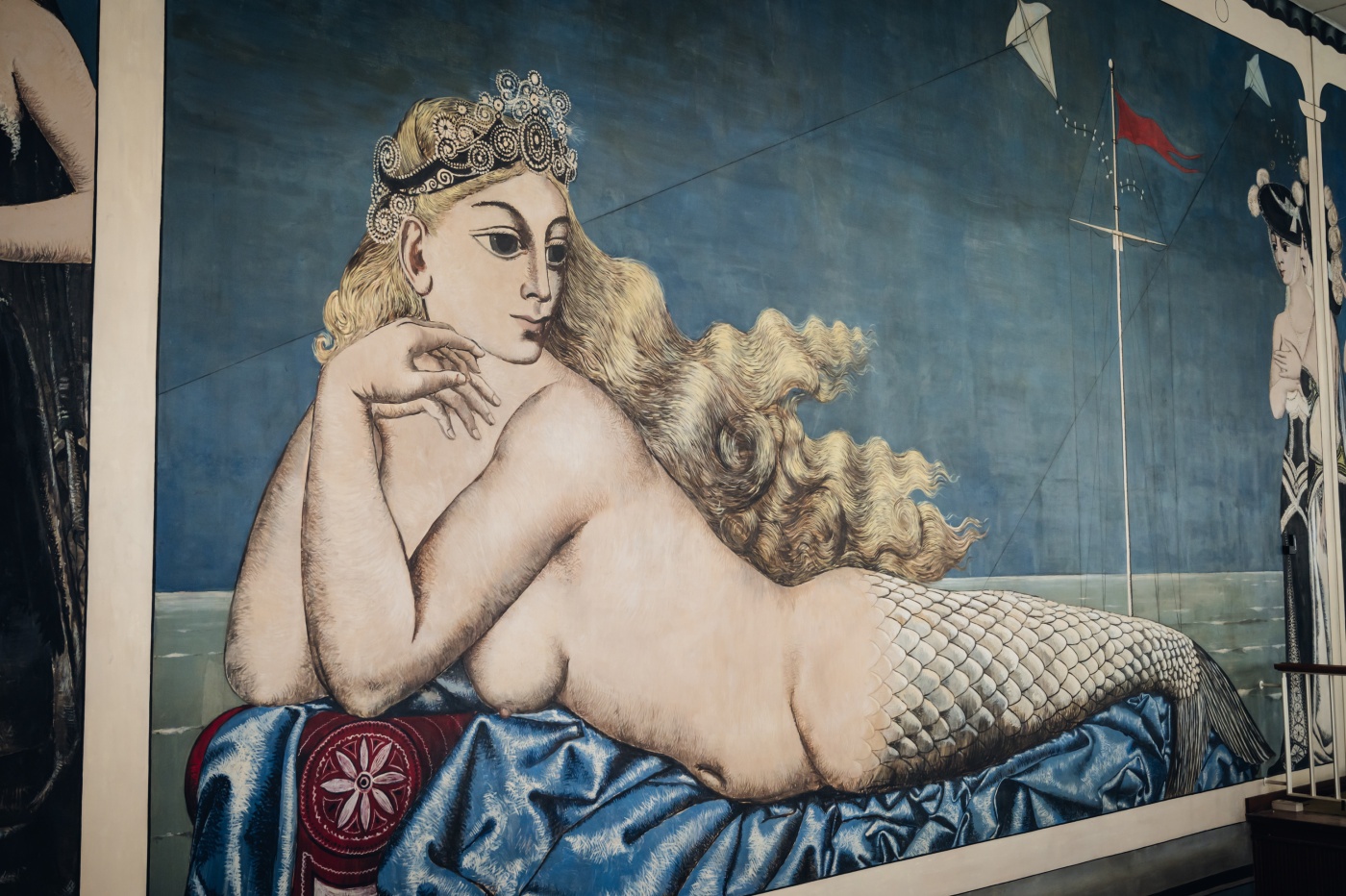
Paul Delvaux’s impressive mural is undoubtedly the Kursaal’s most striking feature. The fresco appears to have been painted directly onto the lime-washed walls, but make no mistake: it consists of many layers of lime and paint. Scientific research and restoration work have revealed the finest brushstrokes and the tiniest traces of color pigment. The restoration—which was completed earlier this year—yielded a stunning result. The masterpiece, measuring 26 meters by 5, shines once again in all its glory. Come admire it in the Delvaux Hall!